
Compliance Program
A compliance program is the operating structure an organization uses to identify obligations, assign accountability, implement controls, monitor performance, and respond when something breaks. It is not a policy binder and it is not a yearly training event. In practice, it is the management layer that keeps legal, regulatory, contractual, and internal requirements from becoming scattered decisions made by different functions at different times.
Most organizations start paying attention to compliance programs when pressure becomes visible. A customer asks for evidence of control. A regulator increases scrutiny. An internal issue exposes weak ownership. A growing company realizes it now has more obligations than its leaders can track informally. In those situations, the problem usually is not lack of effort. It is lack of structure.
That is why a real compliance program has to be designed as a system. It needs defined scope, obligation tracking, control logic, reporting cadence, escalation paths, and a way to translate requirements into normal operational work. That systems approach is consistent with your landing page requirements and internal title set.
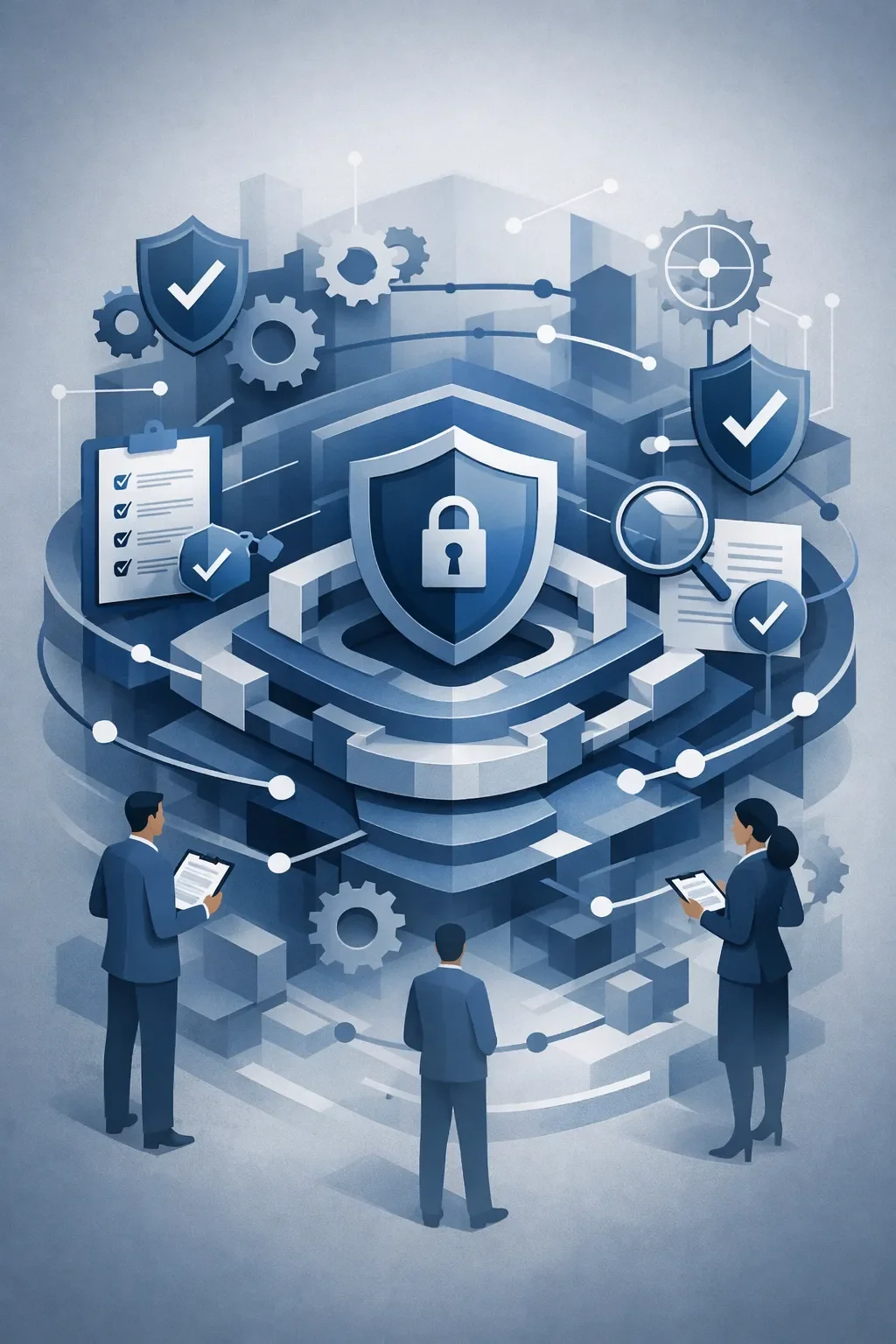
What a Compliance Program Actually Is
A compliance program is the coordinated framework used to manage conformance across the organization. Depending on the business, that may include laws, regulations, customer requirements, contract terms, internal policies, industry expectations, or recognized frameworks.
A weak definition treats compliance as “following rules.” A more useful definition is this: compliance is the disciplined conversion of external and internal obligations into controlled organizational behavior.
That matters because requirements do not manage themselves. Someone has to determine what applies, how it applies, who owns it, what evidence proves conformity, what monitoring is needed, and what happens when performance drifts. Without that structure, organizations end up with fragmented controls, duplicate work, and false confidence.
A functioning compliance program usually includes:
Defined scope for applicable requirements and business activities
A method for identifying and updating obligations
Assigned ownership at process and control level
Policies, procedures, and work instructions where needed
Training and awareness tied to actual responsibilities
Monitoring, testing, and reporting mechanisms
Issue escalation and corrective action pathways
Periodic management review and program improvement
This is where compliance starts to overlap with Governance Risk and Compliance and Regulatory Compliance Program. Those topics are adjacent, but a compliance program page should stay focused on how the structure works inside the organization, not just on governance theory or regulatory interpretation.
Why It Matters
Organizations that do not build a structured compliance program usually rely on tribal knowledge, reactive decisions, and isolated subject matter experts. That can work for a while, especially in smaller businesses, but it breaks down under growth, customer scrutiny, staffing changes, or regulatory complexity.
A compliance program matters because it creates consistency. It reduces the chance that obligations sit unassigned. It improves visibility into where controls exist and where they do not. It also helps leadership distinguish between isolated errors and systemic weakness.
In practical terms, a mature program supports:
Fewer surprises during audits, customer reviews, and inspections
Better control over regulatory and contractual exposure
Clearer accountability across departments
More reliable evidence of performance
Faster response when issues are identified
Stronger trust with customers, partners, and regulators
The strategic value is broader than avoiding penalties. A good compliance program improves operating discipline. It forces clearer process ownership. It strengthens decision-making when risk, speed, and customer expectations are pulling in different directions.
What a Real Compliance Program Requires
A compliance program is only credible if it is built around repeatable operating mechanisms. That means more than creating a code of conduct and assigning one person to “own compliance.”
Scope and Applicability
The program has to define what requirements apply and where. That sounds basic, but many compliance efforts fail here. Requirements are either overgeneralized or interpreted too narrowly. Scope should account for the organization’s services, locations, customers, technologies, data, products, and regulatory environment.
Obligation Identification
The organization needs a way to identify obligations and keep them current. That includes regulatory requirements, customer flowdowns, contractual commitments, internal standards, and sometimes voluntary frameworks adopted by the business. If no one maintains this inventory, the program becomes stale almost immediately.
Ownership and Accountability
Every major compliance requirement should connect to accountable owners. Not symbolic owners. Actual responsible parties who can explain how compliance is achieved, what controls exist, what records are maintained, and what happens when an exception occurs.
Control Design and Implementation
Requirements must be translated into controls. Some controls are procedural. Some are technical. Some are approval-based. Some are monitoring activities. The important point is that compliance has to show up in operational work, not just in documentation.
This is where pages like Compliance Risk Assessment and Internal Audit become useful adjacent topics. Risk assessment helps determine where failure is more likely or more severe. Internal audit helps verify whether the system is functioning as designed.
Communication, Training, and Awareness
Training has to be role-based. Generic awareness has limited value on its own. A compliance program works better when people understand what they are responsible for, what records matter, when escalation is required, and how nonconformities are handled.
Monitoring and Reporting
Organizations need some way to measure whether the program is working. That can include control testing, performance indicators, audit results, incident trends, corrective action status, policy exceptions, and management reporting. If leadership only hears about compliance during a failure, the program is underdeveloped.
How Compliance Programs Usually Break Down
Most compliance programs do not fail because leaders openly reject compliance. They fail because organizations confuse activity with control.
Common problems include:
Requirements identified once, then never reviewed again
Policies written without operational integration
Ownership assigned without authority or competence
Training treated as proof of compliance
Control evidence inconsistent across departments
Issues corrected locally but not systemically
Reporting focused on completion, not effectiveness
Leadership visibility limited to major incidents
Another recurring problem is over-documentation. Some organizations respond to compliance pressure by creating too many policies, too many approvals, and too many forms. That can make the program look mature while actually making it harder to operate. A better approach is to design controls proportionate to risk, complexity, and actual business use.
Auditors and informed customers typically look beyond document existence. They want to see whether obligations are understood, controls are implemented, records are maintained, and problems are escalated appropriately. That is why a compliance program should be designed as an operating model, not a documentation exercise.
What Auditors, Customers, and Regulators Actually Look For
External reviewers usually want to answer a few practical questions.
First, does the organization know what applies to it? Second, are those requirements assigned and translated into real controls? Third, can the organization show evidence that controls operate consistently? Fourth, when something goes wrong, is there a disciplined response?
Evidence often includes:
Requirement or obligation registers
Policy and procedure alignment
Assigned process or control owners
Training and competence records
Monitoring results and internal review outputs
Incident or issue logs
Corrective action records
Management review or leadership reporting evidence
A program that cannot answer those questions usually depends too heavily on individual memory. That creates fragility. If one manager leaves or one process changes, compliance performance can drop faster than leadership expects.
How a Compliance Program Is Typically Built
A serious compliance engagement usually starts with diagnosis, not document drafting. The goal is to understand the organization’s obligations, delivery model, maturity, and current control environment before building or repairing the program.
A practical implementation model often looks like this.
1. Define the Program Scope
Determine which regulations, contractual commitments, internal standards, and business activities are in scope. Clarify whether the program is enterprise-wide or focused on a particular domain, such as privacy, product quality, cybersecurity, or government contracting.
2. Identify Obligations and Expectations
Build or clean up the requirement inventory. This step often exposes overlaps, missed obligations, outdated assumptions, and areas where customer commitments exceed minimum regulatory requirements.
3. Map Requirements to Processes and Owners
Translate obligations into business process impacts. This is where compliance becomes operational. Requirements should connect to departments, workflows, controls, records, and responsible roles.
4. Evaluate Existing Controls
Determine what already exists, what works, what is informal, and what is missing. This is usually where the gap between perceived compliance and actual control becomes visible.
5. Design the Program Structure
Develop the management layer around the controls. That may include policy architecture, escalation rules, review cadence, metrics, internal monitoring, issue management, and leadership oversight.
6. Implement, Train, and Stabilize
Roll the program into normal operations. Clarify expectations, train responsible roles, establish evidence practices, and resolve early friction points.
7. Monitor and Improve
A compliance program is never finished in a static sense. Requirements change, operations evolve, and controls degrade over time. The program needs review, testing, and improvement mechanisms to stay credible.
Organizations often pair this work with Compliance Management System, Internal Audit Services, or Enterprise Risk Framework depending on maturity and complexity.
The Difference Between a Weak Program and a Useful One
A weak compliance program is mostly symbolic. It looks organized from a distance, but it depends on manual reminders, heroic individuals, and inconsistent evidence.
A useful compliance program is operational. It creates clarity across functions. It helps people know what matters, what to do, what to document, and when to escalate. It also gives leadership a basis for informed oversight rather than assumption.
The difference usually comes down to whether the program is integrated into actual management routines. When compliance is separate from process ownership, risk review, internal audit, and corrective action, it tends to become superficial.
That is why many organizations eventually need stronger alignment across compliance, risk, and operational management. For some, that means building a clearer path into Enterprise Risk Management Framework or Virtual Compliance Officer support if internal ownership is still developing.
Strategic Value Beyond Compliance
A compliance program should reduce exposure, but that is not its only value. Well-structured programs also strengthen execution.
They improve cross-functional coordination. They make process weaknesses easier to detect. They create more defensible decisions. They help organizations scale without losing control of obligations that were once managed informally.
This becomes especially important in regulated, customer-audited, or fast-growing environments. In those settings, compliance is often a signal of management maturity. Customers and partners are not only evaluating whether an organization has policies. They are evaluating whether the organization can operate predictably under scrutiny.
That is the broader business case. A compliance program supports resilience, customer confidence, and decision discipline. It helps an organization move from reactive correction to managed control.
If You’re Evaluating a Compliance Program
The important question is not whether your organization has compliance documents. It is whether your obligations are translated into accountable, monitored, repeatable operating practices.
If you cannot clearly explain what applies, who owns it, how it is controlled, what evidence exists, and how performance is reviewed, the program likely needs work. In most cases, the right response is not more paperwork. It is a better structure.
Next Strategic Considerations
Contact us.
info@wintersmithadvisory.com
(801) 477-6329