
ISO 13485 Certifications: What They Are and How to Achieve Them
If your organization designs, manufactures, distributes, installs, or services medical devices, ISO 13485 certifications are often a business necessity — not just a competitive advantage.
ISO 13485 certification demonstrates that your quality management system (QMS) meets internationally recognized requirements for medical device regulatory compliance, risk management, and product safety. It is frequently required for:
Market access in Canada, the EU, and many global jurisdictions
OEM and contract manufacturer partnerships
Regulatory inspections and supplier qualification
Investor and acquisition due diligence
Below is a practical breakdown of what ISO 13485 certifications involve, who needs them, and how to navigate the process efficiently.
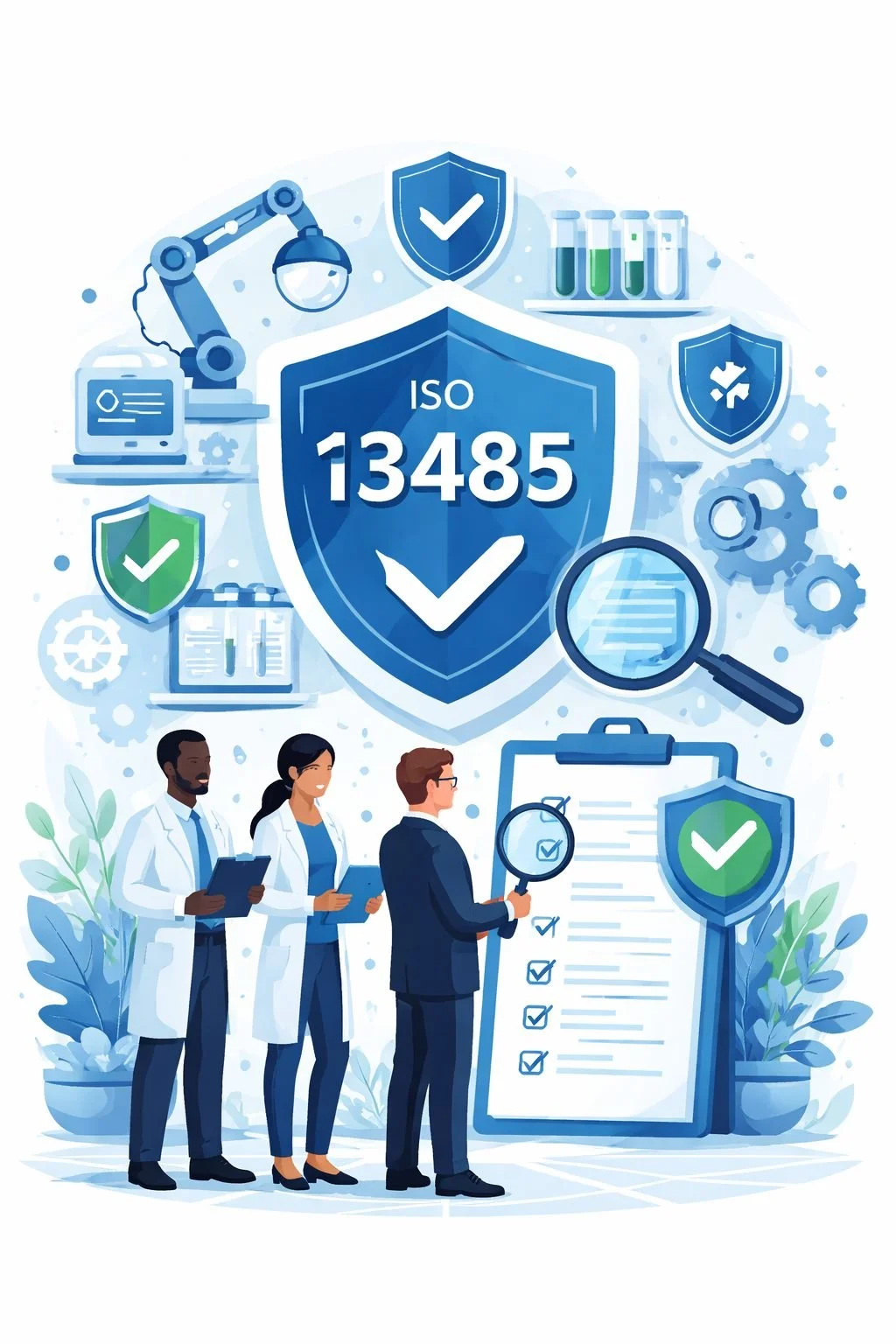
What Are ISO 13485 Certifications?
ISO 13485 is a sector-specific quality management system standard for medical device organizations. It aligns closely with regulatory frameworks such as:
FDA modernization under FDA QMSR Consultant alignment
EU MDR 2017/745 requirements
Health Canada Medical Device Regulations
MDSAP program expectations
Unlike ISO 9001, ISO 13485 places stronger emphasis on:
Risk-based thinking integrated throughout the QMS
Regulatory documentation controls
Traceability and device history records
Supplier qualification and monitoring
Design and development validation
Complaint handling and post-market surveillance
For a deeper comparison between general QMS requirements and medical device–specific obligations, see ISO 13485 Consultant Services.
Who Needs ISO 13485 Certifications?
ISO 13485 certifications typically apply to:
Medical device manufacturers
Contract manufacturers
Component and critical suppliers
Sterilization providers
Design and development firms
Distributors with regulatory responsibilities
If your organization influences device safety, performance, labeling, packaging, installation, or servicing, ISO 13485 certification may be expected by regulators or customers.
Organizations building or restructuring their quality infrastructure often benefit from a defined Medical Device QMS architecture before entering formal certification.
The ISO 13485 Certification Process
Achieving ISO 13485 certification follows a structured path. The order matters. Skipping steps creates audit risk.
1. Gap Assessment
An initial review compares existing processes against ISO 13485 requirements. This identifies:
Missing procedures
Documentation gaps
Regulatory misalignments
Incomplete risk management integration
A formal gap assessment sets scope boundaries and prevents unnecessary system bloat.
2. QMS Development and Implementation
This phase typically includes:
Quality manual and policy development
SOP creation and revision
Risk management file alignment
Design control integration
Supplier qualification frameworks
Training and competence records
Risk management must align with ISO 14971 Risk principles and be embedded across product lifecycle activities — not treated as a standalone document.
3. Internal Audit and Management Review
Before certification, the organization must conduct:
Full internal audits
Corrective action processes
Management review meetings
These activities confirm implementation effectiveness and leadership oversight.
4. Certification Body Audit
An accredited certification body conducts:
Stage 1 Audit (documentation and readiness review)
Stage 2 Audit (full system implementation assessment)
Upon successful completion, ISO 13485 certification is issued for a three-year cycle with annual surveillance audits.
Organizations preparing for audit often review what it means to operate as an ISO 13485 Certified Company to ensure documentation maturity matches audit expectations.
How Long Do ISO 13485 Certifications Take?
Typical timelines:
Small organizations (under 20 employees): 4–6 months
Mid-size organizations: 6–9 months
Complex, multi-site organizations: 9–12+ months
Timeline depends on:
Existing documentation maturity
Design control complexity
Regulatory inspection history
Internal resource availability
Compressed timelines are possible but increase internal strain if not carefully structured.
Common Challenges with ISO 13485 Certifications
Medical device companies frequently encounter challenges with:
Integrating risk management across processes
Maintaining traceability documentation
Managing supplier controls effectively
Aligning complaint handling with regulatory reporting
Understanding the relationship between ISO 13485 and FDA QMSR
Modern FDA harmonization makes alignment with QMSR increasingly important. Structured implementation that anticipates regulatory crossover prevents dual-system confusion.
ISO 13485 Certifications vs. Regulatory Approval
It is critical to distinguish between:
ISO 13485 certification
Regulatory clearance (e.g., 510(k), CE Mark)
ISO 13485 certification demonstrates a compliant quality management system. It does not replace product approval requirements. However, it is often foundational to achieving them.
Certification supports regulatory submissions by establishing:
Controlled design history
Validated production processes
Structured complaint management
Supplier oversight
Without a stable QMS, regulatory filings become fragile.
Costs of ISO 13485 Certifications
Cost components typically include:
Consulting support (if used)
Internal personnel allocation
Certification body audit fees
Annual surveillance audits
Certification body audit costs often range from $15,000–$30,000 for a three-year cycle, depending on organizational size and scope. Implementation investment varies significantly based on system maturity.
Poorly structured implementation typically increases long-term cost through corrective actions, audit findings, and operational inefficiencies.
Why Structured Implementation Matters
For medical device organizations, ISO 13485 certifications are not just about passing an audit. They are about:
Protecting patients
Reducing regulatory exposure
Building scalable processes
Supporting global expansion
Strengthening investor confidence
A poorly designed QMS creates operational friction and audit instability.
A well-designed QMS becomes a business asset.
ISO 13485 Certifications with Strategic Support
At Wintersmith Advisory, support typically includes:
ISO 13485 gap assessments
Full QMS implementation
Internal audit preparation
FDA QMSR alignment
Supplier control optimization
Surveillance audit stabilization
Whether pursuing first-time certification or restructuring an unstable system, disciplined implementation ensures durability — not just certification.
Next Strategic Considerations
Organizations pursuing ISO 13485 certifications often evaluate:
Each represents a strategic layer of regulatory and operational alignment.
If you are preparing for market entry, scaling operations, or responding to regulatory pressure, ISO 13485 certification is often a milestone that defines your maturity as a medical device organization.
The right structure reduces audit risk, accelerates timelines, and builds a system designed for growth — not just compliance.
Contact us.
info@wintersmithadvisory.com
(801) 477-6329