
RIOS Certification: How to Achieve Compliance in the Recycling Industry
What Is RIOS Certification?
RIOS certification is not a generic management system exercise.
It is an integrated framework built specifically for recycling operations — combining environmental management, health and safety, and operational quality into a single system designed for real-world risk.
Wintersmith Advisory supports organizations in building RIOS-aligned systems that are operationally effective, audit-ready, and capable of sustaining compliance in high-risk recycling environments.
Certification is not the objective.
Operational control is.
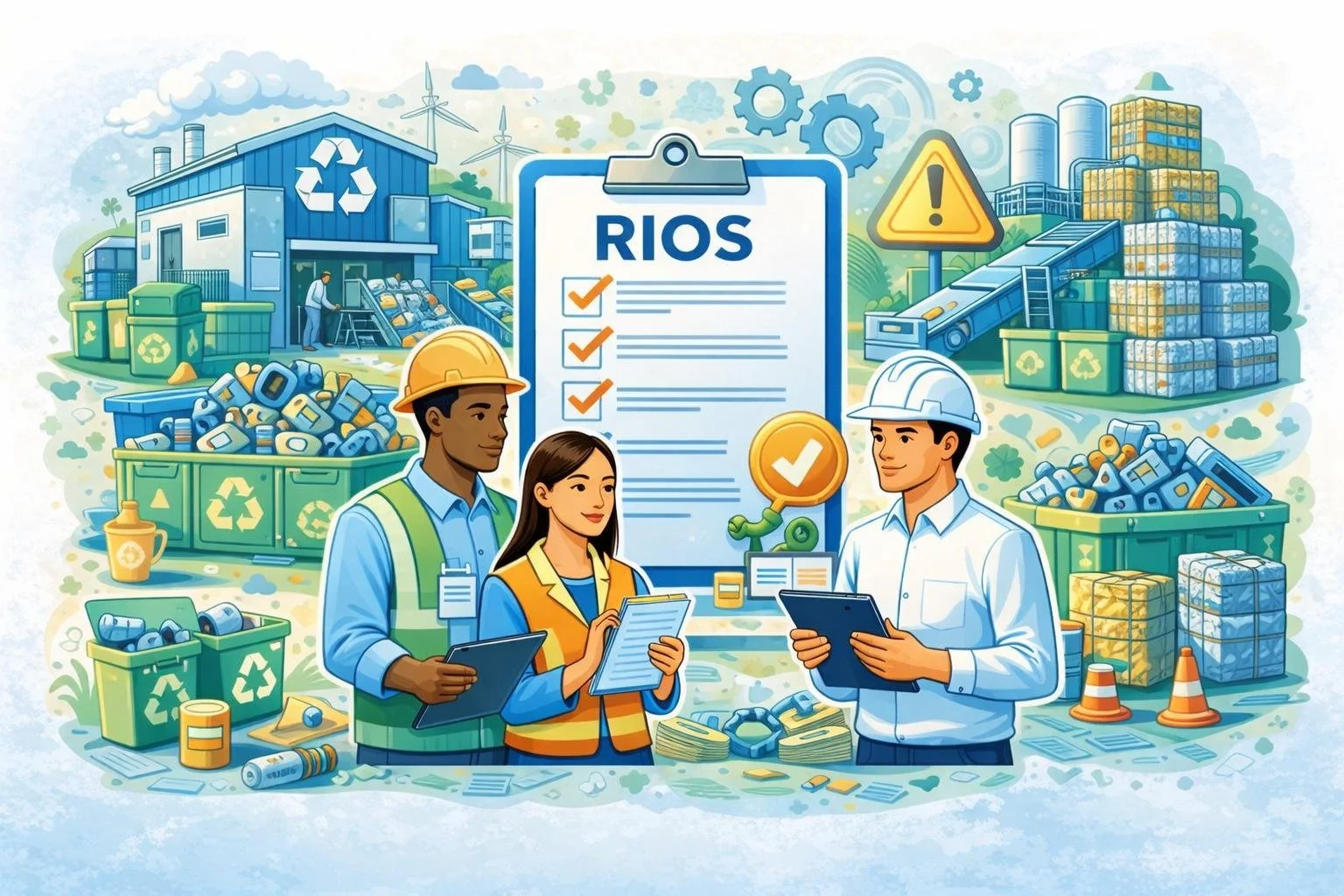
What RIOS Certification Actually Means
RIOS certification validates that your organization operates a structured, integrated management system aligned with the Recycling Industry Operating Standard.
This includes:
Environmental risk and regulatory compliance management
Occupational health and safety controls
Operational process discipline
Internal audit and corrective action systems
Leadership oversight and accountability
For many recycling operations, RIOS becomes the backbone of how the facility operates — not just a certification milestone.
Organizations comparing certification pathways often review What is R2 Certification to understand how downstream accountability and data security requirements differ.
Who Pursues RIOS Certification
RIOS certification is typically pursued by organizations operating in recycling and materials recovery environments.
Common sectors include:
Electronics recyclers
IT asset disposition (ITAD) providers
Scrap metal processors
Plastic and paper recyclers
Material recovery facilities (MRFs)
Industrial recycling operations
Customer requirements, municipal contracts, and downstream partner expectations often drive certification.
Organizations handling sensitive data or downstream material accountability frequently evaluate R2v3 Certification Services alongside RIOS.
What RIOS Certification Covers
RIOS requires a unified management system addressing environmental, safety, and operational controls.
Environmental Controls
Environmental aspect identification
Regulatory compliance tracking
Waste handling and disposal procedures
Pollution prevention controls
Emergency preparedness
Auditors expect traceable evidence of compliance — not policy statements.
Health and Safety Controls
Hazard identification and risk assessment
Training and competency tracking
Incident investigation processes
PPE requirements
Corrective action systems
Safety systems must reflect actual operations and documented evidence.
Quality and Operational Controls
Process monitoring and control
Customer feedback and complaint management
Supplier oversight
Record and document control
Internal audit program
Organizations familiar with structured systems such as ISO 9001 Consultant frameworks often adapt more efficiently to RIOS implementation.
RIOS vs ISO Certifications
RIOS incorporates core management system principles found in ISO standards but consolidates them into a recycling-specific framework.
Organizations often compare RIOS with:
ISO 14001 Certification Consulting for environmental management
ISO 45001 Consultant for occupational health and safety
ISO 9001 Consultant for quality systems
For many recycling operations, RIOS provides a more practical and cost-effective approach than maintaining multiple standalone certifications.
The Path to RIOS Certification
RIOS certification follows a structured, evidence-based process.
1. Gap Assessment
We evaluate your current operations against RIOS requirements to identify:
Missing or incomplete documentation
Weak regulatory tracking
Gaps in hazard identification
Inconsistent training records
Limited internal audit coverage
This produces a prioritized remediation roadmap.
Organizations often begin with ISO Gap Assessment methodologies to establish a disciplined baseline.
2. Management System Development
The integrated system must define:
Policy and scope
Roles and responsibilities
Environmental and safety risk registers
Operational controls
Incident response procedures
Internal audit program
For broader system architecture, organizations often align with ISO Management System Consulting.
3. Implementation and Training
The system must be actively used and evidenced.
This includes:
Generating and maintaining records
Performing risk assessments
Investigating incidents
Closing corrective actions
Demonstrating leadership involvement
Auditors evaluate execution, not documentation volume.
Where internal capability is limited, ISO Internal Audit Services can support readiness.
4. Internal Audit and Management Review
Before certification:
All system elements must be audited internally
Nonconformities must be addressed
Leadership must conduct management review
This demonstrates system maturity and governance.
5. Certification Audit
An accredited certification body conducts:
Stage 1 audit (readiness review)
Stage 2 audit (implementation audit)
Successful completion results in RIOS certification.
How Long RIOS Certification Takes
Typical timelines include:
4–6 months — smaller recycling operations
6–9 months — mid-size facilities
9–12+ months — complex or multi-site organizations
Timeline depends on operational complexity, regulatory exposure, and system maturity.
Common Challenges in RIOS Certification
Recycling organizations often encounter challenges such as:
Informal or inconsistent compliance tracking
Weak safety documentation and controls
Ineffective incident investigation processes
Lack of structured internal audits
Dependence on undocumented institutional knowledge
Structured implementation reduces the risk of major nonconformities and audit delays.
What Differentiates This Approach
Many RIOS implementations fail due to over-reliance on templates and underinvestment in operational integration.
This approach is structured differently.
Integrated System Design
Environmental, safety, and operational controls are built into one cohesive system.
Operational Alignment
Processes reflect how work is actually performed, not theoretical models.
Audit-Ready Structure
Systems are designed to withstand certification audits with clear evidence and accountability.
Scalable Implementation
The system evolves with operational growth without creating unnecessary administrative burden.
Outcomes You Should Expect
A well-implemented RIOS system delivers:
Improved regulatory compliance control
Stronger safety performance and accountability
Reduced environmental risk exposure
Consistent operational processes
Audit-ready documentation and records
Increased credibility with customers and partners
Certification validates the system. Operational discipline sustains it.
Why This Matters
RIOS certification is not just a compliance milestone.
It directly impacts:
Contract eligibility
Regulatory risk exposure
Safety performance
Environmental responsibility
Operational consistency
Organizations that implement RIOS effectively build systems that hold up under both audit scrutiny and real operational stress.
If You’re Also Evaluating…
Certification decisions in recycling should be driven by material streams, customer requirements, and regulatory exposure — not convenience.
RIOS, when implemented correctly, becomes part of how your operation runs every day.
Contact us.
info@wintersmithadvisory.com
(801) 477-6329