
Corporate Sustainability Programs
Understanding Why Organizations Are Building Corporate Sustainability Programs
Most organizations don’t start looking into corporate sustainability programs because it sounds progressive.
They start because something forces the conversation.
A major customer adds ESG requirements into contracts.
A board asks for measurable sustainability metrics.
An investor requests disclosure aligned to recognized frameworks.
An internal initiative exposes gaps between stated values and operational reality.
At that point, sustainability stops being a messaging exercise and becomes an operating problem.
Corporate sustainability programs sit at the intersection of governance, risk, operations, and reporting. They are not campaigns. They are structured systems designed to translate environmental, social, and governance expectations into repeatable, auditable processes.
Organizations that treat sustainability as branding tend to stall.
Organizations that treat it as a management system tend to scale.
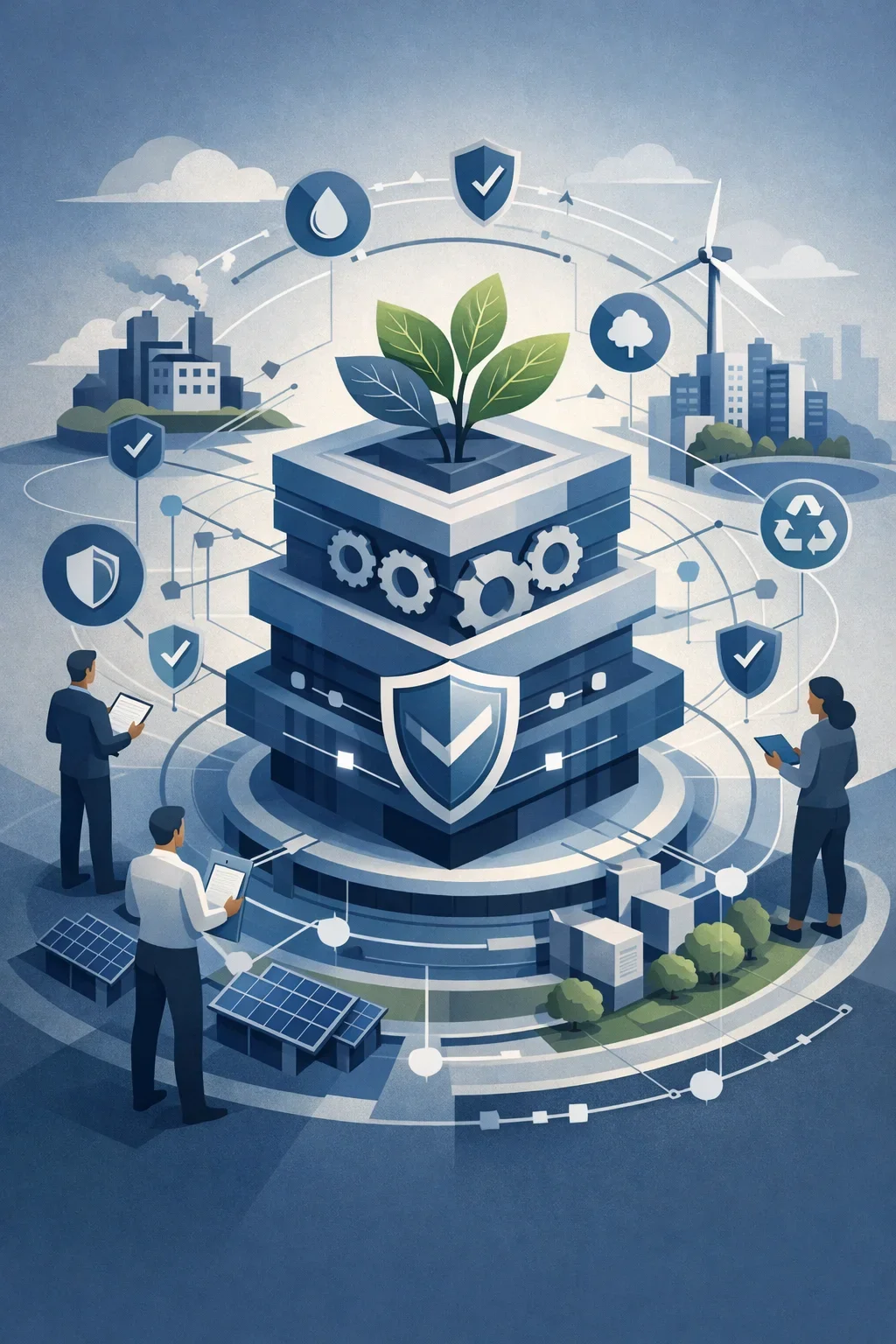
What Corporate Sustainability Programs Actually Are
A corporate sustainability program is a structured operating model that integrates environmental, social, and governance (ESG) considerations into how the organization runs.
It is closely aligned with frameworks like Environmental, Social, & Governance and standards such as ISO 14001, ISO 26000, and GRI.
But in practice, it’s not defined by the framework—it’s defined by how the organization operationalizes it.
At a functional level, a sustainability program includes:
Defined sustainability objectives aligned to business strategy
Measurable metrics (emissions, waste, energy, labor practices, governance controls)
Documented processes that embed sustainability into operations
Accountability structures across leadership and functional teams
Monitoring, reporting, and continuous improvement mechanisms
This is why sustainability programs often converge with management system thinking.
They begin to resemble quality systems, risk frameworks, and operational governance models—not standalone initiatives.
Organizations that recognize this early tend to build programs that last.
How Corporate Sustainability Programs Work in Practice
A sustainability program is not implemented all at once. It is built in layers, typically following a structured approach similar to other management systems.
At a high level, the process includes:
1. Context and Scope Definition
This is where most organizations underestimate complexity.
You need to define:
Which parts of the organization are in scope
Which sustainability topics are material (environmental, social, governance)
Which regulatory, contractual, or stakeholder requirements apply
This step often overlaps with Enterprise Risk Management because sustainability risks (climate exposure, supply chain risk, regulatory pressure) must be formally evaluated.
2. Framework and Standard Alignment
Organizations rarely operate without a reference model.
They typically align to:
ESG reporting frameworks (GRI, SASB, etc.)
ISO-based structures (environmental, governance, social responsibility)
Industry-specific sustainability expectations
For environmental programs specifically, alignment with ISO 14001 Implementation is common, as it provides a structured environmental management system foundation.
The key here is not selecting a framework—it’s translating it into operational requirements.
3. Process Integration
This is where sustainability programs either succeed or fail.
Instead of creating parallel processes, sustainability must be embedded into existing workflows:
Procurement → supplier sustainability requirements
Operations → energy use, waste control, emissions tracking
HR → labor practices, training, ethics
Governance → oversight, reporting, accountability
This is fundamentally a Process Consulting problem, not a documentation exercise.
4. Data, Metrics, and Reporting
Sustainability without measurement is not a program—it’s a narrative.
Organizations must define:
What gets measured
How data is collected
Who owns the data
How often it is reviewed
Reporting typically aligns with external frameworks, but internally it must support decision-making.
5. Internal Audit and Validation
Sustainability programs are increasingly subject to audit—internally and externally.
This often involves structured reviews similar to Conducting an Audit processes:
Verification of data accuracy
Evaluation of process effectiveness
Identification of gaps or nonconformities
Organizations that skip this step struggle with credibility.
6. Continuous Improvement
Sustainability is not static.
Programs must evolve as:
Regulations change
Customer expectations increase
Business operations scale
This is where alignment with Maintaining a System becomes critical. Without maintenance discipline, programs degrade quickly.
What’s Actually Required to Build a Functional Program
A corporate sustainability program requires more than policies and reporting templates.
It requires operational structure.
Core components typically include:
Executive ownership with defined accountability
A cross-functional governance structure
Documented processes tied to real operational workflows
Defined metrics and performance targets
Training aligned with sustainability responsibilities
Internal audit capability and corrective action processes
Many organizations underestimate the importance of training. Sustainability expectations must be understood across the organization, which often requires structured enablement similar to Providing a Learning Service.
Without that, sustainability remains centralized and ineffective.
Where Corporate Sustainability Programs Break Down
Most failures are not due to lack of intent. They’re due to how the program is built.
Common breakdown points include:
Treating sustainability as reporting instead of operations
Creating isolated ESG teams without integration into business functions
Over-reliance on frameworks without translating them into processes
Lack of clear ownership across departments
Weak or inconsistent data collection methods
No internal audit or validation mechanism
One of the most common issues is misalignment during rollout.
Organizations attempt to introduce sustainability requirements without structured transition planning. This is where Change Management Service becomes essential—without it, adoption stalls at the operational level.
What Auditors, Customers, and Stakeholders Actually Look For
External expectations around sustainability have matured significantly.
Stakeholders are no longer satisfied with:
High-level ESG statements
Generic sustainability goals
Inconsistent reporting
They look for evidence of system-level implementation:
Clear linkage between sustainability objectives and business processes
Consistent, reliable data across reporting periods
Defined roles and responsibilities
Evidence of internal audits and corrective actions
Demonstrated continuous improvement
In other words, they look for a management system—not a presentation.
How Corporate Sustainability Programs Are Typically Implemented
From an engagement standpoint, implementation tends to follow a structured model.
Phase 1: Assessment and Gap Analysis
Evaluate current state against:
ESG expectations
Applicable standards
Internal capabilities
This often aligns with broader ISO Compliance Services approaches.
Phase 2: Program Design
Define:
Scope and objectives
Governance structure
Process requirements
Metrics and reporting model
This is where sustainability transitions from concept to system design.
Phase 3: Implementation
This involves:
Embedding processes into operations
Training teams
Establishing data collection mechanisms
Aligning documentation with operational reality
This phase mirrors structured approaches found in Implementing a System.
Phase 4: Validation and Audit Readiness
Before external reporting or certification, organizations must validate:
Data accuracy
Process effectiveness
Organizational readiness
Phase 5: Ongoing Operation and Improvement
Once live, the program must be actively managed.
This includes:
Periodic audits
Performance reviews
Continuous improvement initiatives
Without this phase, programs lose relevance quickly.
Strategic Value of Corporate Sustainability Programs
When implemented correctly, sustainability programs extend far beyond compliance.
They directly influence:
Risk Management
Sustainability programs identify and mitigate risks related to:
Environmental impact
Supply chain disruption
Regulatory exposure
This reinforces alignment with enterprise-level risk frameworks.
Operational Efficiency
Environmental and sustainability initiatives often lead to:
Reduced energy consumption
Lower waste generation
Improved process efficiency
These are operational improvements—not just sustainability outcomes.
Customer and Market Positioning
Many organizations now require sustainability alignment from suppliers.
A structured program:
Enables participation in regulated or ESG-driven markets
Strengthens credibility with enterprise customers
Supports long-term contract eligibility
Governance and Decision-Making
Sustainability introduces structured data into executive decision-making.
This improves:
Strategic planning
Investment decisions
Organizational accountability
If You’re Also Evaluating…
If you’re building or refining a corporate sustainability program, these adjacent areas typically become relevant next:
These are not separate initiatives—they are extensions of how sustainability becomes operational, measurable, and credible at scale.
Contact us.
info@wintersmithadvisory.com
(801) 477-6329