
ESG Consulting Services
Organizations today face increasing pressure to demonstrate responsible environmental, social, and governance (ESG) performance. Investors, regulators, customers, and supply chain partners now expect transparent sustainability strategies supported by measurable outcomes.
ESG consulting services help organizations move beyond marketing claims and build structured governance systems that integrate sustainability into operational decision-making.
These services typically focus on:
ESG strategy development and governance frameworks
Sustainability risk and opportunity assessment
ESG reporting and disclosure alignment
Integration of environmental and social performance into operational systems
Implementation of ESG-related international standards and frameworks
For organizations exploring the strategic foundations of sustainability governance, Environmental, Social, & Governance provides the conceptual structure behind ESG program development.
Well-designed ESG programs connect sustainability objectives to risk management, operational controls, and measurable business outcomes.
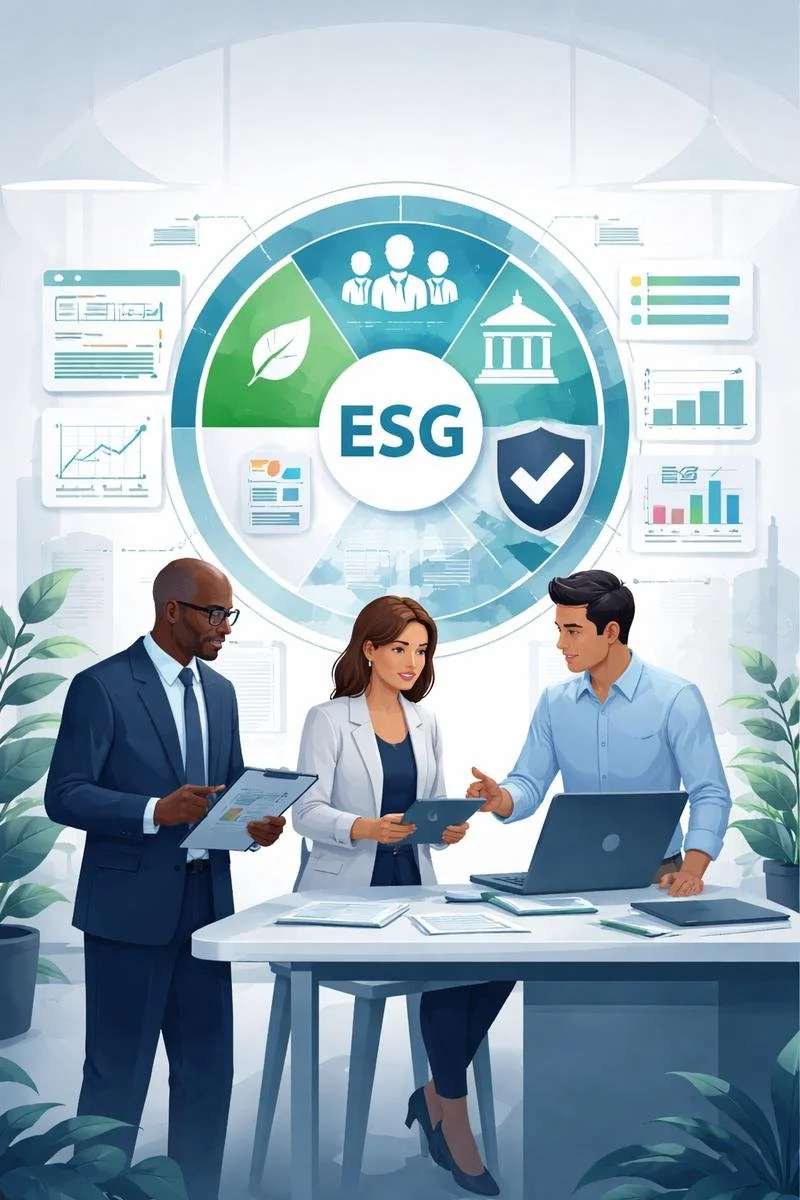
What ESG Consulting Services Typically Include
ESG consulting is not a single service. It is a structured set of advisory activities that help organizations establish governance, reporting, and performance management mechanisms aligned with stakeholder expectations.
Typical ESG consulting engagements include:
ESG strategy and policy development
Sustainability risk and opportunity assessment
ESG performance measurement and KPI definition
ESG disclosure framework alignment
Sustainability governance program design
Cross-functional implementation planning
Internal audit and assurance preparation
Many organizations combine ESG initiatives with broader governance and operational improvement efforts such as Enterprise Risk Management and structured Process Consulting initiatives to ensure sustainability commitments translate into operational reality.
ESG Strategy Development
An ESG program begins with defining strategic priorities that reflect the organization’s risk profile, regulatory environment, and stakeholder expectations.
A structured ESG strategy typically includes:
Identification of material sustainability topics
Stakeholder impact analysis
Alignment with corporate strategy
Long-term sustainability goals
Defined governance oversight responsibilities
Performance measurement frameworks
Many organizations use ESG consulting services to transform informal sustainability efforts into structured governance programs supported by documented policies, performance metrics, and management accountability.
Effective strategy development requires coordination across executive leadership, operations, compliance functions, and risk management teams.
ESG Governance and Organizational Structure
ESG initiatives often fail when responsibilities are unclear or accountability is distributed across departments without coordination.
Consulting engagements typically help organizations define:
ESG governance committees and leadership oversight
Sustainability policy frameworks
ESG ownership across business units
Data management and reporting responsibilities
Board-level oversight mechanisms
Governance structures frequently align with broader organizational transformation efforts such as Change Management Service engagements that help organizations integrate new governance responsibilities into existing operational processes.
Clear governance structures ensure ESG objectives are embedded within business operations rather than treated as standalone sustainability programs.
ESG Reporting and Disclosure Frameworks
Many organizations seek ESG consulting support to navigate complex reporting frameworks and disclosure expectations.
Common ESG reporting frameworks include:
Global sustainability reporting standards
Climate-related financial risk disclosures
Supply chain sustainability reporting requirements
Investor ESG performance reporting expectations
Consultants help organizations align internal data collection, governance structures, and documentation processes with reporting frameworks such as GRI Standards 1-3, which provide internationally recognized sustainability disclosure guidance.
Effective ESG reporting requires consistent data governance, internal controls, and cross-functional coordination.
Environmental Performance Integration
Environmental performance is a core pillar of ESG programs. Many organizations integrate environmental management systems into ESG governance to strengthen operational performance and regulatory alignment.
Environmental initiatives often focus on:
Energy and emissions management
Resource efficiency and waste reduction
Environmental compliance governance
Climate risk mitigation strategies
Sustainable procurement programs
Organizations implementing structured environmental governance frequently align ESG initiatives with formal management systems supported by an ISO 14001 Consultant or structured ISO 14001 Implementation programs.
Environmental management systems provide a structured framework for tracking environmental performance and demonstrating regulatory compliance.
Social Responsibility and Workforce Governance
The social dimension of ESG focuses on workforce practices, community engagement, supply chain responsibility, and stakeholder trust.
Key social governance areas often include:
Workforce health and safety
Labor practices and employee wellbeing
Diversity, equity, and inclusion initiatives
Supply chain responsibility programs
Community engagement and impact initiatives
Organizations frequently align ESG social governance initiatives with established occupational safety frameworks supported by an ISO 45001 Consultant, helping integrate worker wellbeing into operational risk management.
Governance and Compliance Alignment
The governance pillar of ESG focuses on ethical leadership, compliance controls, transparency, and risk management oversight.
Governance consulting services often address:
Corporate governance structures
Compliance management programs
Anti-corruption and ethics frameworks
Risk oversight and control monitoring
Internal audit and assurance mechanisms
Organizations implementing comprehensive governance structures often align ESG initiatives with broader management systems supported by ISO Compliance Services, ensuring sustainability governance integrates with existing operational controls.
This integrated approach prevents ESG initiatives from becoming isolated reporting exercises disconnected from operational decision-making.
ESG Implementation Roadmaps
After strategy and governance structures are defined, ESG consulting engagements typically focus on structured implementation planning.
An ESG implementation roadmap commonly includes:
Gap assessment against ESG frameworks
Prioritized implementation phases
Data governance and performance measurement design
Internal policy development
Reporting and disclosure preparation
Internal training and stakeholder alignment
Implementation planning often includes structured system deployment support such as Implementing a System engagements that guide organizations through the operational rollout of governance frameworks.
A phased implementation roadmap helps organizations move from ESG ambition to measurable performance outcomes.
ESG Assurance, Monitoring, and Continuous Improvement
Sustainability governance requires ongoing performance monitoring and periodic evaluation.
Consulting support often includes establishing internal mechanisms for:
ESG internal audits
Sustainability performance reviews
KPI monitoring and performance reporting
Governance committee oversight
Continual improvement initiatives
Organizations frequently conduct structured sustainability audits supported by Conducting an Audit services to evaluate ESG program maturity and identify improvement opportunities.
Continuous monitoring ensures ESG commitments remain credible and aligned with evolving stakeholder expectations.
Why Organizations Engage ESG Consultants
Many organizations pursue ESG consulting services when internal resources lack experience in sustainability governance, reporting frameworks, or cross-functional implementation.
External advisors help organizations:
Accelerate ESG program development
Align sustainability initiatives with international frameworks
Reduce regulatory and investor risk exposure
Establish defensible reporting practices
Integrate ESG governance into operational decision-making
Consulting support is particularly valuable when ESG initiatives intersect with enterprise risk management, regulatory compliance, and global reporting obligations.
The Strategic Value of ESG Governance
ESG governance is increasingly viewed as a core business capability rather than a corporate social responsibility initiative.
Strong ESG programs can support:
Investor confidence and capital access
Supply chain qualification and procurement opportunities
Regulatory compliance readiness
Brand reputation and stakeholder trust
Long-term operational resilience
Organizations that integrate ESG governance into operational systems gain better visibility into sustainability risks and opportunities.
Over time, ESG programs evolve from disclosure-driven reporting exercises into strategic management frameworks guiding long-term decision-making.
Next Strategic Considerations
Organizations evaluating ESG consulting services often explore related governance and management system initiatives, including:
These initiatives often complement ESG governance programs by establishing structured management systems that support sustainability, risk management, and long-term organizational resilience.
Contact us.
info@wintersmithadvisory.com
(801) 477-6329