
ISO 27001 and GDPR Compliance
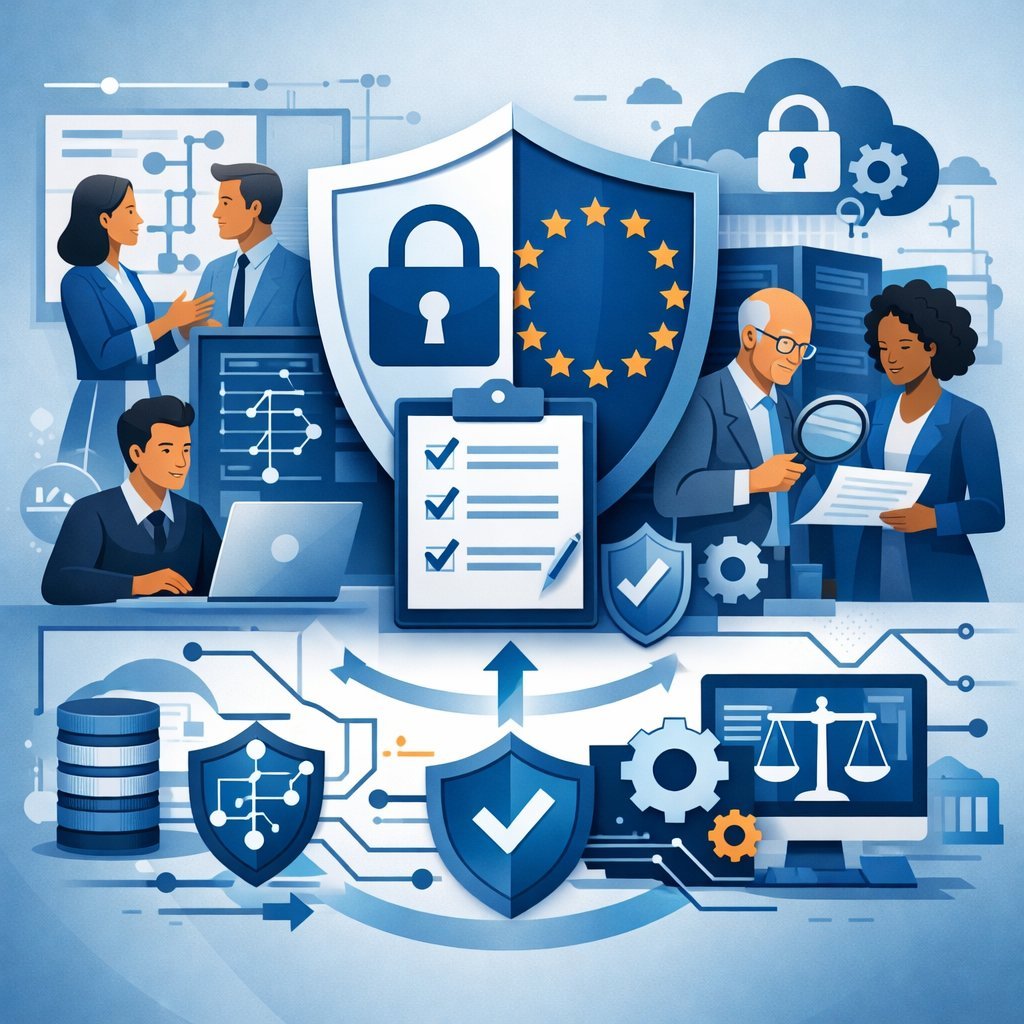
Organizations handling personal data in the European Union must comply with the General Data Protection Regulation (GDPR). At the same time, many organizations implement ISO 27001 to establish a structured Information Security Management System (ISMS).
While ISO 27001 and GDPR serve different purposes, they are closely related. GDPR establishes legal obligations for protecting personal data, while ISO 27001 provides the operational management system used to control information security risks.
When implemented correctly, ISO 27001 becomes a powerful framework for achieving structured GDPR compliance.
Many organizations pursuing alignment between security governance and regulatory obligations begin with ISO 27001 Certification Consulting, which establishes the management system foundation necessary for defensible data protection practices.
This guide explains how ISO 27001 supports GDPR, where the frameworks overlap, and how organizations integrate them effectively.
What Is ISO 27001?
ISO 27001 is the international standard for Information Security Management Systems.
It defines how organizations:
Identify information security risks
Implement appropriate security controls
Monitor and review risk management effectiveness
Continually improve security governance
Rather than prescribing individual technical tools, ISO 27001 establishes a structured governance framework for managing security risks across people, processes, and technology.
Organizations implementing this framework typically engage an ISO 27001 Consultant to design the ISMS architecture and ensure audit readiness.
What Is GDPR?
The General Data Protection Regulation is the European Union’s primary privacy regulation governing the processing of personal data.
GDPR applies to organizations that:
Process personal data of EU residents
Offer services to EU individuals
Monitor behavior of individuals within the EU
Key GDPR principles include:
Lawful and transparent processing
Data minimization
Purpose limitation
Storage limitation
Integrity and confidentiality
Accountability
While GDPR is a legal regulation rather than a management system standard, it requires organizations to demonstrate structured control over personal data.
For many organizations, implementing ISO 27001 becomes a practical pathway to achieving that level of operational governance.
Why ISO 27001 Supports GDPR Compliance
GDPR requires organizations to implement “appropriate technical and organizational measures” to protect personal data.
ISO 27001 provides the management system used to define and maintain those measures.
The ISMS structure supports GDPR by enabling:
Formal risk assessment for information security and privacy threats
Documented policies and security procedures
Access control governance
Incident response and breach management
Supplier security oversight
Continuous monitoring and improvement
Organizations that treat GDPR as a purely legal exercise often struggle operationally. ISO 27001 transforms privacy obligations into operational processes that can be audited and maintained.
Companies evaluating governance maturity frequently implement both standards simultaneously through Integrated ISO Management Consultant programs that align security, privacy, and operational risk oversight.
Key Areas Where ISO 27001 and GDPR Align
While the frameworks are different, there is strong alignment between their requirements.
Risk Management
Both frameworks require risk-based governance.
ISO 27001 requires formal information security risk assessments, while GDPR requires organizations to assess risks to individuals’ rights and freedoms.
Structured governance programs often align both activities within broader ISO Risk Management Consulting initiatives to avoid duplicate assessments.
Security Controls
ISO 27001 Annex A provides a structured catalog of information security controls covering:
Access management
Cryptography
Logging and monitoring
Supplier security
Incident management
Asset protection
These controls directly support GDPR’s requirement for appropriate technical and organizational safeguards.
Data Protection Governance
GDPR requires organizations to demonstrate accountability for personal data processing.
ISO 27001 governance processes support this requirement through:
Documented policies
Defined responsibilities
Management review
Internal audits
Corrective action tracking
Organizations integrating privacy governance often extend their ISMS using ISO 27701 Privacy Management, which builds a Privacy Information Management System (PIMS) on top of ISO 27001.
Incident Management and Breach Notification
GDPR requires organizations to detect, investigate, and report data breaches.
ISO 27001 supports this through structured incident response processes including:
Incident identification and classification
Response coordination
Evidence preservation
Root cause analysis
Corrective actions
These controls significantly improve breach response readiness.
Supplier and Third-Party Risk
Both frameworks require oversight of third-party data processors.
ISO 27001 supplier security controls support GDPR requirements by enabling organizations to:
Assess vendor security risks
Establish contractual security requirements
Monitor third-party compliance
Organizations managing complex supplier ecosystems often combine these controls with broader Enterprise Risk Management Consultant frameworks.
Where ISO 27001 Does Not Fully Cover GDPR
While ISO 27001 supports GDPR compliance, it does not fully replace GDPR obligations.
Key GDPR requirements outside ISO 27001 include:
Lawful basis for processing personal data
Data subject rights management
Privacy notices and transparency obligations
Data protection impact assessments (DPIAs)
Appointment of Data Protection Officers where required
Because of these legal elements, organizations frequently supplement ISO 27001 with GDPR Compliance Consulting to address regulatory interpretation and privacy program design.
The Role of ISO 27701 in GDPR Alignment
ISO 27701 extends ISO 27001 to include privacy management.
It provides guidance for:
Personal data governance
Data controller responsibilities
Data processor responsibilities
Privacy impact assessments
Privacy information lifecycle management
For organizations handling significant volumes of personal data, ISO 27701 helps bridge the gap between information security management and regulatory privacy compliance.
The ISO 27001 and GDPR Implementation Approach
Organizations integrating security and privacy governance typically follow a structured implementation process.
Step 1 – Governance and Scope Definition
The first step is defining:
Organizational scope
Data processing activities
Information assets
Legal obligations
This stage establishes the governance boundaries for both security and privacy programs.
Step 2 – Risk Assessment
Organizations conduct:
Information security risk assessments
Privacy impact assessments
Data protection risk analysis
The goal is identifying threats to both information assets and individual data rights.
Step 3 – Control Implementation
Based on risk findings, organizations implement controls such as:
Access management procedures
Encryption controls
Incident response protocols
Vendor security oversight
Privacy policies and procedures
These controls form the operational backbone of the ISMS and privacy program.
Step 4 – Documentation and Evidence
Both ISO 27001 and GDPR require documented evidence of governance activities.
Common documentation includes:
Security policies
Risk registers
Data processing inventories
Incident logs
Supplier assessments
Organizations often formalize these artifacts during ISO 27001 Implementation projects.
Step 5 – Monitoring and Internal Audit
To ensure ongoing compliance, organizations must monitor performance and verify control effectiveness.
This typically includes:
Internal audits
Management reviews
Continuous improvement activities
Professional ISO 27001 Audit support helps organizations prepare for both certification and regulatory oversight.
Benefits of Integrating ISO 27001 and GDPR
Organizations implementing a unified security and privacy governance model gain several advantages.
Key benefits include:
Structured protection of sensitive and personal data
Demonstrable regulatory accountability
Improved breach detection and response
Stronger vendor risk management
Increased customer trust and contractual credibility
Simplified audit preparation
Most importantly, integration reduces fragmentation between security operations and regulatory compliance programs.
Common Mistakes Organizations Make
Organizations frequently struggle when ISO 27001 and GDPR initiatives are handled independently.
Common issues include:
Treating GDPR as a legal-only project
Implementing security controls without privacy governance
Poorly defined scope for data processing activities
Lack of leadership involvement in privacy decisions
Failing to maintain documentation and evidence
Effective governance requires coordination between security teams, legal teams, and executive leadership.
Organizations pursuing long-term maturity often integrate privacy and security programs within broader ISO Compliance Services models that unify risk, audit, and governance structures.
Is ISO 27001 Enough for GDPR?
ISO 27001 alone does not guarantee GDPR compliance.
However, it provides one of the strongest operational foundations available for meeting GDPR security requirements.
Organizations that implement ISO 27001 effectively typically achieve:
Stronger security governance
Clear documentation of controls
Defensible incident management
Demonstrable accountability
These capabilities significantly reduce GDPR compliance risk.
For many organizations, ISO 27001 becomes the structural backbone of their data protection program.
Next Strategic Considerations
If you are evaluating ISO 27001 and GDPR alignment, organizations often explore:
A structured assessment of your current security and privacy controls is usually the most effective starting point for building a defensible, integrated governance program.
Contact us.
info@wintersmithadvisory.com
(801) 477-6329