
ISO 27001 for Small Businesses
Small businesses face the same cyber threats as large enterprises — but often with fewer resources and less structured security governance.
ISO 27001 provides a disciplined framework for managing information security risk, protecting sensitive data, and demonstrating trust to customers, regulators, and partners.
For smaller organizations, the standard is not about building a large security bureaucracy. It is about establishing a practical Information Security Management System (ISMS) that protects the business while remaining scalable.
Many companies exploring ISO 27001 adoption begin by working with an ISO 27001 Consultant to define scope boundaries, risk methodology, and implementation priorities aligned to their size and operational maturity.
This guide explains how ISO 27001 works specifically for small businesses and how certification can be achieved without unnecessary complexity.
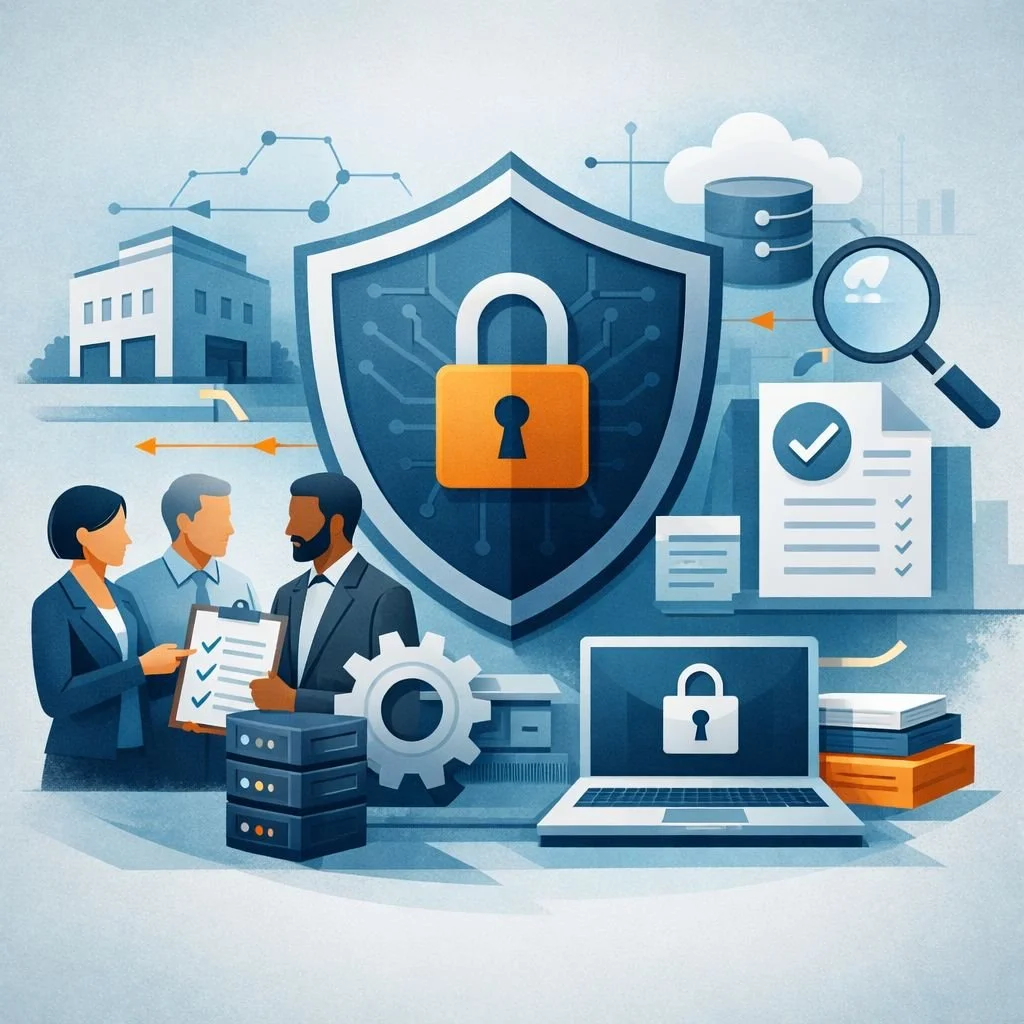
Why ISO 27001 Matters for Small Businesses
Cybersecurity is no longer an enterprise-only concern.
Small organizations increasingly store sensitive information including:
Customer personal data
Intellectual property
Payment information
Confidential contracts
Vendor and partner data
Internal financial records
At the same time, small businesses are frequently targeted by attackers because they are perceived as having weaker security controls.
ISO 27001 helps address this risk through structured governance, risk assessment, and operational controls.
Organizations implementing ISO 27001 typically strengthen:
Customer trust and vendor qualification credibility
Regulatory defensibility for privacy and security obligations
Internal security discipline and risk visibility
Incident response readiness
Data protection practices across employees and suppliers
Companies pursuing certification often structure implementation through ISO 27001 Implementation programs to ensure policies, risk registers, and security controls align with audit expectations.
What ISO 27001 Actually Requires
ISO 27001 is built around a management system rather than a list of static security tools.
The standard requires organizations to:
Identify information assets and risks
Define security controls based on risk treatment
Implement operational safeguards
Monitor and review system effectiveness
Conduct internal audits
Perform leadership oversight and improvement
This structured governance model is why many organizations integrate ISO 27001 within broader ISO Compliance Services strategies that coordinate multiple management systems.
The Information Security Management System (ISMS)
At the center of ISO 27001 is the ISMS — the framework used to manage security risks across the organization.
A small-business ISMS typically includes:
Security policies and governance structure
Information asset inventory
Risk assessment methodology
Risk treatment plan and security controls
Incident response procedures
Access management controls
Vendor and third-party security management
Security awareness training
Organizations that already operate structured management systems such as ISO 9001 Quality Management System frequently find ISO 27001 easier to implement because the governance model is similar.
ISO 27001 Controls Relevant to Small Businesses
The ISO 27001 control framework (Annex A) contains dozens of potential safeguards. Small organizations implement only the controls justified by their risk assessment.
Common controls implemented by small businesses include:
Access Control
Role-based system permissions
Multi-factor authentication
Account lifecycle management
Privileged access restrictions
Data Protection
Encryption for sensitive data
Secure backup procedures
Data classification rules
Retention and disposal policies
Operational Security
Patch management and vulnerability updates
Malware protection
System monitoring and logging
Secure configuration baselines
Supplier Security
Vendor security expectations
Contractual data protection requirements
Third-party access control
Cloud-based organizations frequently supplement ISO 27001 with ISO 27017 & 27018 guidance to strengthen cloud service provider security practices.
How Small Businesses Scope ISO 27001
One of the most important early decisions is defining the ISMS scope.
Small organizations typically limit scope to:
Specific products or services
Key business processes
Critical information assets
A defined business unit or platform
A well-defined scope reduces implementation cost and audit complexity while still protecting high-risk data.
Companies that struggle with scope boundaries often begin with an ISO Gap Assessment to identify practical implementation boundaries before formal rollout.
ISO 27001 Implementation Timeline for Small Businesses
Implementation speed varies based on security maturity and leadership involvement.
Typical timelines include:
Small startups: 3–5 months
Small to mid-sized organizations: 4–7 months
Multi-product SaaS or regulated firms: 6–9 months
Structured ISO Implementation Services can accelerate implementation by providing templates, risk frameworks, and audit-ready documentation.
The ISO 27001 Certification Process
ISO 27001 certification involves a third-party audit performed by an accredited certification body.
The process typically includes four phases.
Phase 1 – Readiness and Gap Analysis
Organizations evaluate current security practices against ISO 27001 requirements and identify gaps.
Phase 2 – ISMS Implementation
This phase includes:
Risk assessment and treatment planning
Security policy development
Control implementation
employee training and awareness
Phase 3 – Internal Audit and Management Review
Before certification, organizations must demonstrate system governance through internal evaluation.
Independent ISO Internal Audit Services are often used to strengthen objectivity before certification.
Phase 4 – Certification Audit
The certification body conducts two audit stages:
Stage 1 – Documentation and readiness review
Stage 2 – Implementation effectiveness verification
Successful organizations receive certification valid for three years with annual surveillance audits.
How Much ISO 27001 Costs for Small Businesses
Certification costs vary widely depending on system maturity and audit scope.
Typical cost factors include:
Organization size
Scope complexity
Number of systems and assets
Certification body fees
Internal security maturity
Costs generally include:
Implementation support
Internal audit preparation
Certification audit fees
Annual surveillance audits
Organizations evaluating certification economics often compare cost structures through ISO 27001 Certification Consulting engagements that model implementation pathways.
Common Mistakes Small Businesses Make
Organizations often struggle with ISO 27001 when they treat it as a documentation exercise rather than a governance system.
Frequent mistakes include:
Over-scoping the ISMS unnecessarily
Writing policies that employees never use
Performing superficial risk assessments
Ignoring supplier security risks
Failing to involve leadership
Neglecting internal audit discipline
ISO 27001 works best when integrated with broader governance models such as Enterprise Risk Management initiatives that align operational, financial, and cybersecurity risk oversight.
ISO 27001 vs Other Security Frameworks
Many small businesses compare ISO 27001 with other cybersecurity frameworks.
Common comparisons include:
SOC 2 for SaaS security assurance
NIST-based frameworks for U.S. regulatory alignment
Privacy frameworks such as ISO 27701 Privacy Management
Government contractor requirements like CMMC 2.0 Compliance Consulting
ISO 27001 is unique because it combines technical security controls with formal governance and certification.
Benefits of ISO 27001 for Small Businesses
When implemented properly, ISO 27001 provides measurable strategic value.
Key advantages include:
Structured cybersecurity governance
Reduced risk of data breaches and operational disruption
Stronger credibility during enterprise vendor qualification
Improved incident response readiness
Demonstrable compliance discipline
Scalable security practices as the business grows
For companies pursuing long-term governance maturity, ISO 27001 often becomes the foundation of broader ISO Management System Consulting initiatives integrating security, quality, and operational risk controls.
Is ISO 27001 Worth It for Small Businesses?
For many small companies — particularly SaaS providers, technology firms, healthcare organizations, and regulated suppliers — ISO 27001 is rapidly becoming a competitive requirement.
Certification demonstrates that security controls are:
Systematic
Audited
Risk-based
Continuously improved
Rather than reacting to individual customer security questionnaires, ISO 27001 allows small businesses to demonstrate an independently verified security management system.
This credibility often accelerates sales cycles, strengthens vendor qualification outcomes, and reduces cybersecurity uncertainty.
Next Strategic Considerations
Contact us.
info@wintersmithadvisory.com
(801) 477-6329