
ISO 27001 Consultant Services
Protecting information assets requires more than technical controls. It requires a structured management system that governs risk, defines accountability, and integrates security into daily operations.
Organizations pursuing ISO 27001 certification must translate the standard into practical governance processes — not just policies. That translation is where most implementations fail.
Wintersmith Advisory provides structured support through our ISO 27001 Certification Consulting services, helping organizations build sustainable Information Security Management Systems (ISMS) aligned with real business operations.
Many organizations pursue ISO 27001 alongside broader governance initiatives such as ISO Risk Management Consulting and enterprise programs supported through ISO Compliance Services.
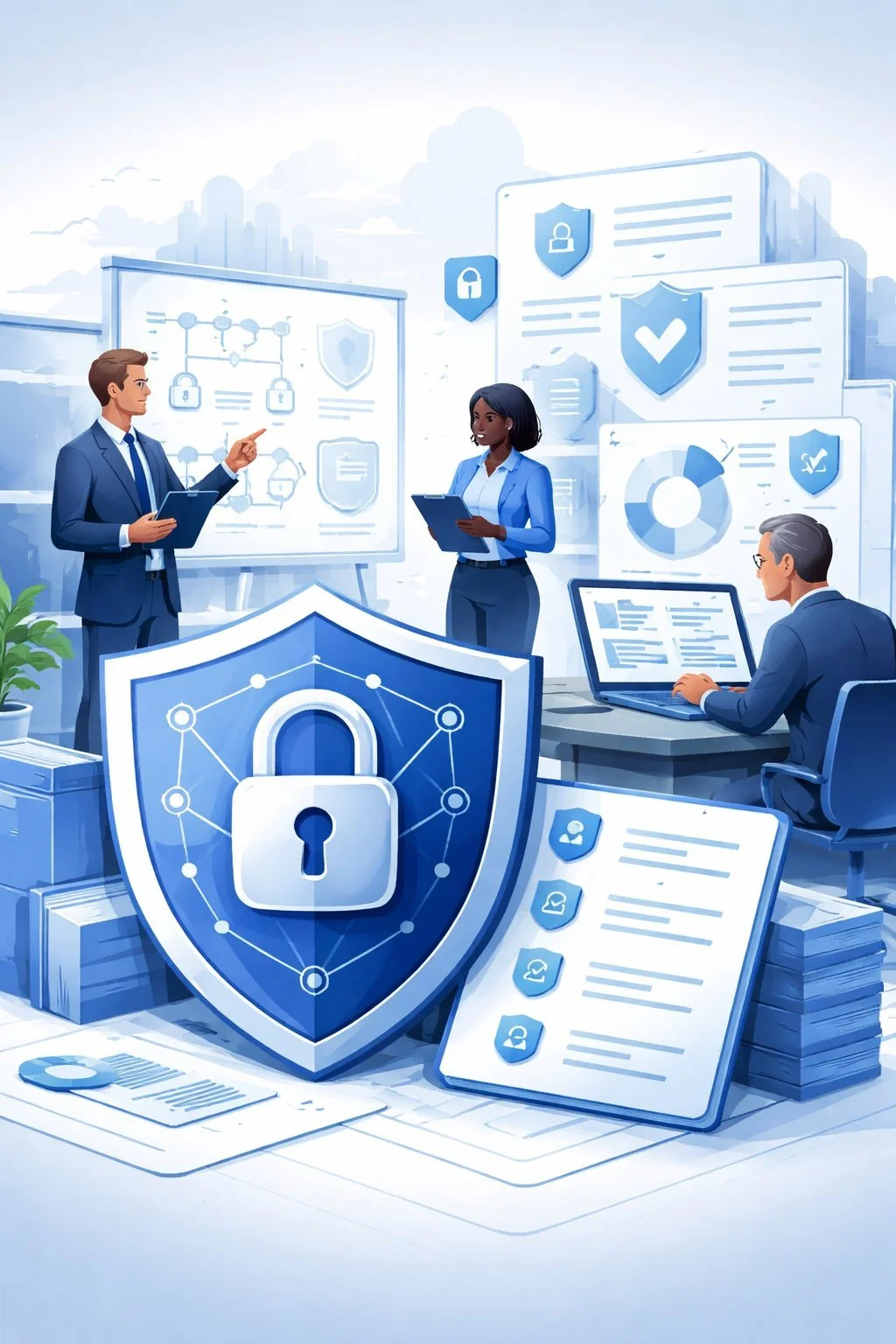
Why Work With an ISO 27001 Consultant
ISO 27001 defines what must exist, but it does not define how to implement it within your organization.
A disciplined consultant ensures that requirements are translated into operational controls that are usable, auditable, and aligned with risk.
Key advantages include:
Structured ISMS Implementation — Build governance processes aligned with ISO 27001 clauses and Annex A controls
Risk-Based Security Management — Define threats, vulnerabilities, and treatment strategies using a defensible methodology
Practical Documentation — Develop policies, procedures, and records that reflect how the organization actually operates
Certification Readiness — Prepare teams for Stage 1 and Stage 2 audits with clear expectations
Sustainable Governance — Establish monitoring, audit, and improvement processes that persist after certification
Information security programs frequently intersect with operational resilience initiatives supported through ISO 22301 Consultant and continuity programs delivered through Business Continuity Consulting.
What ISO 27001 Consultant Services Include
A structured engagement focuses on building a functioning ISMS — not producing documentation for its own sake.
Core consulting activities include:
ISMS scope definition and organizational boundary alignment
Information asset identification and classification frameworks
Risk assessment methodology and risk treatment planning
Security policy and governance structure development
Annex A control implementation guidance
Internal audit preparation and certification readiness support
Ongoing ISMS monitoring and continual improvement design
Organizations with cloud-based infrastructure often expand their security posture through Cloud Security Standards Consulting to address distributed environments and modern architecture risks.
The ISO 27001 Consulting Process
Successful ISO 27001 implementation follows a structured sequence. Each phase builds toward a system that can withstand certification scrutiny and operational realities.
ISO 27001 Gap Assessment
The first step evaluates your current state against ISO 27001 requirements.
Key activities include:
Review of existing policies, controls, and governance structures
Evaluation of leadership involvement and accountability
Identification of gaps against ISO 27001 clauses and Annex A
Assessment of existing risk management methodology
Delivery of a prioritized remediation roadmap
This phase is often delivered through ISO Gap Assessment or broader readiness programs such as ISO Readiness Assessment.
ISMS Design and Documentation
Once gaps are identified, the ISMS framework is designed and structured.
This stage includes:
ISMS scope definition and boundary setting
Asset inventory and classification model development
Policy and procedure creation aligned to ISO requirements
Risk treatment planning and Statement of Applicability development
Integration with operational workflows and business processes
Organizations frequently align ISMS development with broader governance through ISO Management System Consulting or enterprise-level coordination via Integrated ISO Management Consultant.
Control Implementation
Implementation translates governance requirements into operational controls.
Typical activities include:
Access control and identity management implementation
Data protection and encryption practices
Network and infrastructure security controls
Supplier and third-party security governance
Incident response and monitoring capability development
Security programs often overlap with IT service governance frameworks supported through ISO 20000 Consultant and IT Service Management Consulting.
Internal Audit and Certification Preparation
Before certification, organizations must validate that the ISMS is functioning effectively.
Preparation includes:
Internal audit planning and execution
Evidence collection and verification
Corrective action identification and remediation
Management review preparation
Audit readiness workshops
These activities are commonly supported through ISO Internal Audit Services and ISO Audit Preparation Services.
Certification Audit and Ongoing Compliance
Certification is conducted by an accredited body in two stages:
Stage 1 — Documentation and readiness review
Stage 2 — Implementation effectiveness audit
Consultant support includes:
Certification body coordination
Audit preparation and facilitation
Nonconformity response and corrective action guidance
Surveillance audit preparation and ongoing ISMS maintenance
Organizations seeking structured certification pathways often engage ISO 27001 Certification Consulting to accelerate readiness.
Benefits of ISO 27001 Certification
Organizations pursue ISO 27001 certification for strategic reasons beyond compliance.
Key benefits include:
Stronger Information Security Governance — Formal controls reduce exposure to security incidents
Increased Customer Confidence — Certification demonstrates disciplined data protection practices
Regulatory Alignment — Supports compliance with privacy and cybersecurity requirements
Competitive Advantage — Strengthens positioning in security-sensitive markets
Operational Resilience — Improves incident response and recovery capability
These benefits often align with broader cybersecurity initiatives such as CMMC 2.0 Compliance Consulting and federal contracting requirements.
Who Typically Uses ISO 27001 Consultant Services
ISO 27001 becomes relevant when information security shifts from IT responsibility to enterprise risk.
Common adopters include:
SaaS and technology companies managing customer data
Financial services organizations handling regulated information
Healthcare and health tech providers managing sensitive data
Government contractors subject to cybersecurity requirements
Global organizations managing cross-border data risk
Many organizations integrate ISO 27001 within broader management systems through Multi-Standard ISO Solutions and enterprise governance programs supported by an Enterprise Risk Management Consultant.
Choosing the Right ISO 27001 Consultant
Information security governance affects nearly every function within an organization. The consulting approach must reflect that reality.
Key considerations include:
Demonstrated experience implementing ISO 27001 across industries
Ability to align ISMS design with enterprise risk management
Structured implementation methodology and project governance
Practical documentation aligned with operational workflows
Long-term support for surveillance audits and system improvement
A strong consulting engagement builds a system that works under audit — and continues working after certification.
Next Strategic Considerations
Organizations evaluating ISO 27001 consulting services often explore adjacent governance and security frameworks:
A structured starting point is a readiness assessment followed by a clearly defined implementation roadmap aligned to ISO 27001 requirements.
Contact us.
info@wintersmithadvisory.com
(801) 477-6329