
ISO 42001 Implementation Services
Most organizations pursuing ISO 42001 arrive through one of three paths: a customer mandate requiring AI governance evidence, internal pressure from legal or compliance after an AI incident, or a board directive to establish formal risk controls around AI systems. In all three cases, the underlying problem is the same — AI is being used in ways that haven't been structured, documented, or controlled at the system level.
ISO 42001 is the international standard for AI management systems. It defines how organizations should establish, implement, maintain, and continuously improve a framework for responsible AI development and deployment. What it does not govern is the AI itself. The standard governs the system around the AI — accountability structures, risk controls, lifecycle oversight, and objective measurement. That distinction is what makes implementation a management systems problem, not a technology problem.
ISO 42001 Consulting translates that governance layer into an operational structure that satisfies auditor requirements, integrates with existing risk frameworks, and holds under real-world scrutiny.
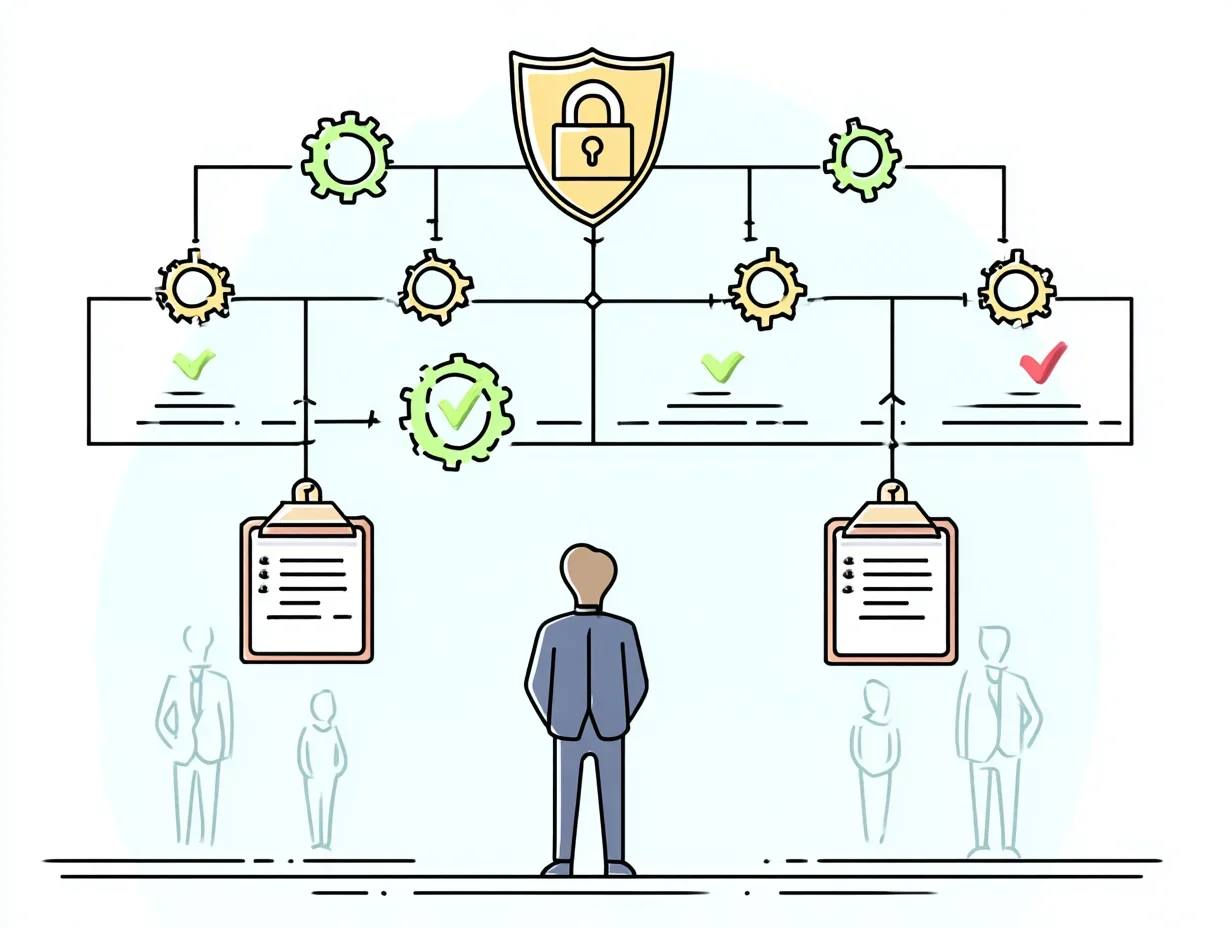
What ISO 42001 Actually Governs
The standard follows the ISO High Level Structure (HLS) shared by ISO 9001, ISO 14001, and ISO 27001. Organizations already operating within one of those frameworks will recognize the structural logic — context, leadership, planning, support, operation, performance evaluation, improvement. If your organization is starting from scratch on management systems, expect to build that discipline alongside the AI-specific controls.
What makes ISO 42001 distinct is the content layered into that structure: AI system impact assessments, AI objectives linked to organizational context, controls for AI system lifecycle management, and explicit requirements around transparency, fairness, and accountability in AI decision-making.
The standard also recognizes that AI governance doesn't operate in isolation. It requires consideration of how AI systems interact with data privacy, security, and bias risk — areas that frequently connect to existing ISO 27001 Implementation Services or emerging regulatory obligations under frameworks like the EU AI Act.
ISO 42001 Requirements and How the Framework Works
Scope Definition
Implementation begins with defining which AI systems, processes, and organizational units fall within the management system. Scope decisions affect audit exposure, control design, and the complexity of everything downstream. Scoping too broadly creates unmanageable overhead. Scoping too narrowly signals to auditors that significant AI activity has been excluded without justification.
AI Policy and Objectives
The organization must establish an AI policy that reflects commitments around responsible AI use, accountability structures, and continual improvement. From that policy, measurable AI objectives must be set and actively tracked. These need to connect to the organization's strategic context — not exist as standalone compliance statements.
Risk Assessment and Controls
ISO 42001 requires a risk assessment process specific to AI systems — covering risks that arise from AI outputs, model behavior, data dependencies, and downstream use. Controls must be selected, implemented, and monitored against identified risks. The standard provides an Annex of suggested controls, but organizations are expected to justify their control selection based on actual risk exposure. This work frequently integrates with a broader ISO 31000 Risk Management Framework already in place.
AI System Lifecycle Management
The standard requires documented oversight of AI systems from development through deployment and decommissioning — including testing, change management, and performance monitoring against defined objectives. Organizations that lack structured development or deployment processes will need to build those alongside the management system itself.
Internal Audit and Management Review
Like all ISO management systems, ISO 42001 requires internal audit and periodic management review. Auditors look for evidence that those processes are functioning, not just documented. Real corrective actions, objective measurement, and active leadership engagement are what separate a functioning system from a paper exercise. Engaging ISO Internal Audit Services early in implementation helps establish that evidence base before certification.
Where Organizations Fail
The most common implementation failure is treating ISO 42001 as a documentation project. Organizations produce an AI policy, an impact assessment template, and a risk register — then assume that constitutes a management system. It doesn't. Auditors examine whether the system operates: whether AI objectives are reviewed and updated, risk assessments reflect actual AI system behavior, controls are monitored, and leadership is actively engaged.
The second failure is scope avoidance. Organizations routinely attempt to exclude high-risk or complex AI systems from the initial scope to simplify implementation. When the excluded systems are the ones driving material business outcomes or customer-facing decisions, that exclusion is visible to auditors and undermines certification credibility.
A third failure specific to ISO 42001 is importing generic management system content without adapting it to AI context. Risk assessment templates from ISO 9001 Implementation work are not directly transferable. AI-specific risks — model drift, training data bias, adversarial inputs, unintended output distribution — require risk language and controls that reflect AI system behavior, not generic operational risk.
Organizations also underestimate the cross-functional coordination required. AI governance touches development, legal, compliance, procurement (particularly for third-party AI tools), HR, and senior leadership. Implementations that sit entirely within IT or a compliance function consistently produce incomplete systems.
How Implementation Actually Works
A structured ISO 42001 engagement runs in four phases:
Phase 1 — Gap Assessment and Scoping (Weeks 1–3) Current AI systems are inventoried. Existing governance structures, policies, and risk processes are mapped against ISO 42001 clause requirements. Scope is defined and agreed. The output is a gap report with a prioritized remediation plan and implementation timeline. This mirrors the approach used in an ISO Gap Assessment for any ISO framework.
Phase 2 — System Design and Documentation (Weeks 4–10) AI policy, AI objectives, risk assessment methodology, control framework, and lifecycle management procedures are developed or adapted to reflect how the organization actually operates. This phase includes integration with existing Enterprise Risk Management frameworks where applicable.
Phase 3 — Implementation and Evidence Development (Weeks 8–16) Controls are operationalized. AI system impact assessments are completed for in-scope systems. Internal audit processes are established and run. Management review is conducted. Corrective actions from audit findings are addressed and documented.
Phase 4 — Certification Readiness and Audit Support (Weeks 14–20) Pre-audit review is conducted against certification body requirements. Stage 1 documentation review and Stage 2 audit are supported through direct advisory engagement. Non-conformities identified during certification are addressed with the corrective action process already in place. Organizations uncertain about the certification pathway can also reference ISO 42001 Certification Body options early in this phase.
Timeline varies based on scope complexity, the maturity of existing management systems, and the number of AI systems in scope. Organizations with an existing ISO management system foundation move faster. Those building governance infrastructure from the ground up should plan for the longer end of that range.
Why This Matters Beyond the Certificate
ISO 42001 certification answers an immediate external question — can you demonstrate structured AI governance? The operational value sits in what the system forces the organization to do internally.
AI risk assessment processes surface exposure that often hasn't been formally evaluated: what happens when a model produces an incorrect output at scale, who owns the decision to retrain or decommission a system, how third-party AI tools are evaluated before deployment. These aren't hypothetical risks. Organizations using AI at any meaningful scale are already managing them — informally.
The management system creates a structure for managing them deliberately. That structure also supports regulatory positioning. The EU AI Act imposes tiered obligations on AI system developers and deployers. Organizations with ISO 42001-aligned governance have a defined starting point for demonstrating compliance rather than beginning that work under regulatory pressure.
For organizations where AI is becoming a significant capability or service delivery mechanism, a functioning AI Governance Compliance structure creates accountability infrastructure that scales with growth. The alternative is governance that lags capability — which is where most AI risk exposure actually originates.
If You're Also Evaluating…
Contact us.
info@wintersmithadvisory.com
(801) 477-6329