
IT Compliance Service
Organizations increasingly depend on secure, reliable, and well-governed information systems. At the same time, regulators, customers, and enterprise partners are demanding stronger proof that IT environments meet defined security and compliance requirements.
An IT compliance service helps organizations build structured governance over information security, regulatory obligations, and operational controls. Instead of reacting to audits or security incidents, organizations implement a disciplined framework that ensures IT practices consistently meet legal, contractual, and industry expectations.
Effective compliance programs do not exist solely within IT departments. They operate as part of enterprise governance, risk management, and management system discipline.
This guide explains what IT compliance services include, when organizations need them, and how structured compliance frameworks reduce both operational risk and audit exposure.
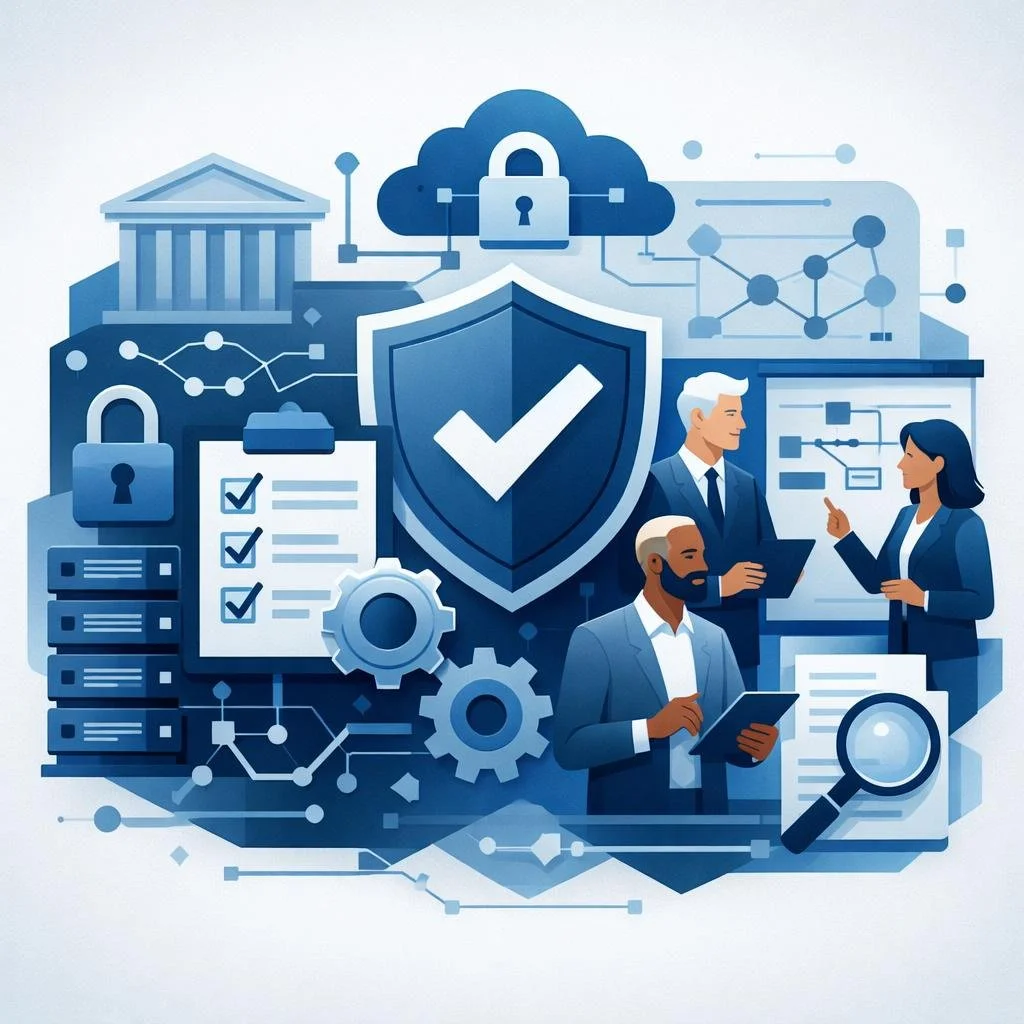
What Is an IT Compliance Service?
An IT compliance service helps organizations establish, implement, and maintain systems that ensure technology environments meet applicable standards, regulations, and contractual obligations.
This includes governance over:
Information security controls
Data protection and privacy practices
Infrastructure resilience
Vendor and cloud security oversight
Risk management processes
Security monitoring and response procedures
Many organizations implement these controls through internationally recognized frameworks such as ISO-based management systems or regulatory compliance models.
Organizations implementing structured information security governance frequently align IT compliance programs with an ISO 27001 Consultant to ensure controls meet globally recognized security standards.
Rather than one-time projects, IT compliance services typically support ongoing governance and continual improvement.
Why IT Compliance Is Increasingly Critical
IT compliance is no longer optional for most organizations. Security, privacy, and operational resilience are now essential expectations across global supply chains.
Organizations typically pursue structured compliance programs when they need to:
Meet contractual security requirements from enterprise customers
Qualify for government contracting opportunities
Protect sensitive customer or operational data
Demonstrate governance maturity to partners or investors
Prepare for security certifications or regulatory audits
For organizations pursuing formal certification, structured implementation programs such as ISO 27001 Implementation provide the operational foundation required for audit readiness.
Without structured governance, IT compliance efforts often become fragmented and reactive.
Core Components of an IT Compliance Program
A disciplined IT compliance program integrates governance, risk management, operational controls, and audit oversight.
Key elements include:
Governance and Policy Framework
Compliance begins with documented governance structures defining how information security is managed across the organization.
Core governance components include:
Information security policies and procedures
Defined roles and responsibilities
Leadership oversight and accountability
Compliance monitoring mechanisms
Organizations frequently align governance structures with broader management systems through ISO Compliance Services, ensuring technology compliance integrates with organizational risk management.
Risk Identification and Assessment
Compliance frameworks require organizations to identify and evaluate risks affecting information systems.
Risk assessment activities typically include:
Asset identification and classification
Threat and vulnerability analysis
Impact evaluation
Risk prioritization and treatment planning
Many organizations align IT risk evaluation with enterprise governance models supported by Enterprise Risk Management Consultant initiatives.
This integration ensures cybersecurity risks are evaluated alongside operational, financial, and strategic risks.
Security Control Implementation
Controls translate compliance requirements into operational safeguards.
Typical control domains include:
Access control management
Network and infrastructure security
Endpoint protection
Secure configuration management
Incident detection and response
Vendor and cloud security oversight
Organizations implementing structured frameworks often integrate these controls within formal management systems through ISO Management System Consulting programs.
Monitoring and Internal Audit
Compliance requires evidence that controls are operating effectively.
Monitoring and verification activities include:
Security event monitoring
Internal control testing
Internal audit programs
Compliance reporting to leadership
Independent internal assessments are frequently conducted through ISO Internal Audit Services to verify compliance readiness before external audits or certification assessments.
Continual Improvement and Corrective Action
Compliance frameworks require organizations to correct weaknesses and improve governance over time.
Improvement processes typically include:
Corrective action management
Root cause analysis of incidents
Compliance performance metrics
Management review and oversight
Structured improvement cycles ensure the compliance program remains effective as threats, technologies, and regulations evolve.
Regulatory and Security Frameworks Supported by IT Compliance Services
IT compliance services often support organizations navigating multiple frameworks simultaneously.
Common frameworks include:
ISO 27001 information security management systems
Data privacy regulations such as GDPR
Government contracting cybersecurity requirements
Sector-specific security frameworks
Vendor security assurance programs
Organizations managing multiple compliance obligations frequently adopt integrated governance models supported by an Integrated ISO Management Consultant, reducing duplication across risk registers, audit programs, and corrective action systems.
Integrated governance significantly improves operational efficiency while strengthening audit defensibility.
The IT Compliance Implementation Process
Building a disciplined IT compliance program typically follows a structured implementation model.
Compliance Readiness Assessment
A readiness assessment identifies gaps between current practices and applicable standards or regulatory requirements.
Assessments typically evaluate:
Security governance maturity
Policy and documentation completeness
Risk management processes
Technical control implementation
Monitoring and audit readiness
Organizations frequently begin with an ISO Gap Assessment to benchmark their current environment against recognized security frameworks.
Program Design and Control Development
Following assessment, organizations design the compliance framework and implement required controls.
Implementation activities often include:
Developing policies and procedures
Establishing risk management processes
Deploying technical and operational controls
Defining monitoring and reporting structures
Organizations pursuing certification frequently implement structured governance systems through ISO 27001 Implementation to ensure the compliance framework meets international standards.
Audit Preparation and Validation
Before external certification or regulatory review, organizations validate their compliance system through internal evaluation.
Preparation activities often include:
Internal audit programs
Evidence documentation reviews
Corrective action closure
Leadership management review
Formal readiness evaluations may be conducted through ISO Audit Preparation Services to reduce the likelihood of external audit findings.
Ongoing Compliance Management
Compliance is an ongoing governance responsibility.
Long-term compliance support typically includes:
Continuous monitoring of control effectiveness
Internal audit programs
Security governance reviews
Compliance program updates as regulations evolve
Organizations maintaining certified systems often rely on structured oversight programs such as ISO 27001 Maintenance to sustain long-term compliance maturity.
Benefits of Professional IT Compliance Services
Organizations implementing disciplined IT compliance programs typically experience improvements across governance, security posture, and operational resilience.
Key benefits include:
Stronger information security governance
Reduced exposure to regulatory penalties
Improved enterprise risk visibility
Increased customer and partner trust
Greater readiness for certification audits
Reduced operational disruption from security incidents
Clear accountability for compliance oversight
Perhaps most importantly, structured compliance programs transform cybersecurity from a reactive function into a governed management system.
When Organizations Should Engage IT Compliance Services
Organizations commonly engage professional IT compliance support when they face:
Security certification requirements from customers
Government contracting cybersecurity obligations
Increasing regulatory scrutiny around data protection
Vendor security assurance requests
Internal governance gaps or fragmented security processes
Companies preparing for formal security certification frequently align IT compliance initiatives with ISO 27001 Certification Consulting to ensure implementation meets audit expectations.
Early engagement significantly reduces implementation risk and accelerates compliance maturity.
IT Compliance as a Strategic Governance System
IT compliance is often misunderstood as a documentation exercise.
In reality, mature compliance programs function as enterprise governance systems that connect technology operations with risk management, leadership oversight, and continual improvement.
When implemented correctly, IT compliance becomes a strategic capability that strengthens resilience, protects information assets, and builds trust with customers, regulators, and partners.
Organizations that treat compliance as a strategic discipline consistently outperform those that attempt to manage security through isolated technical controls.
Next Strategic Considerations
Organizations evaluating IT compliance governance frequently explore these related initiatives:
The most effective starting point for most organizations is a structured compliance readiness assessment followed by a phased implementation roadmap aligned with recognized information security frameworks.
Contact us.
info@wintersmithadvisory.com
(801) 477-6329