
Process Improvement Consulting
Organizations rarely struggle because people are incapable.
They struggle because processes evolve organically, responsibilities blur, and operational systems lose structure over time.
Process improvement consulting addresses these issues systematically. Instead of reacting to problems, organizations redesign how work flows across departments, systems, and decision layers.
The goal is simple:
Create processes that are repeatable, measurable, and scalable.
When executed correctly, process improvement reduces operational friction, improves performance visibility, and strengthens organizational resilience.
Many organizations begin this work through Process Consulting, where current workflows are analyzed and improvement opportunities are identified across operations, governance, and management systems.
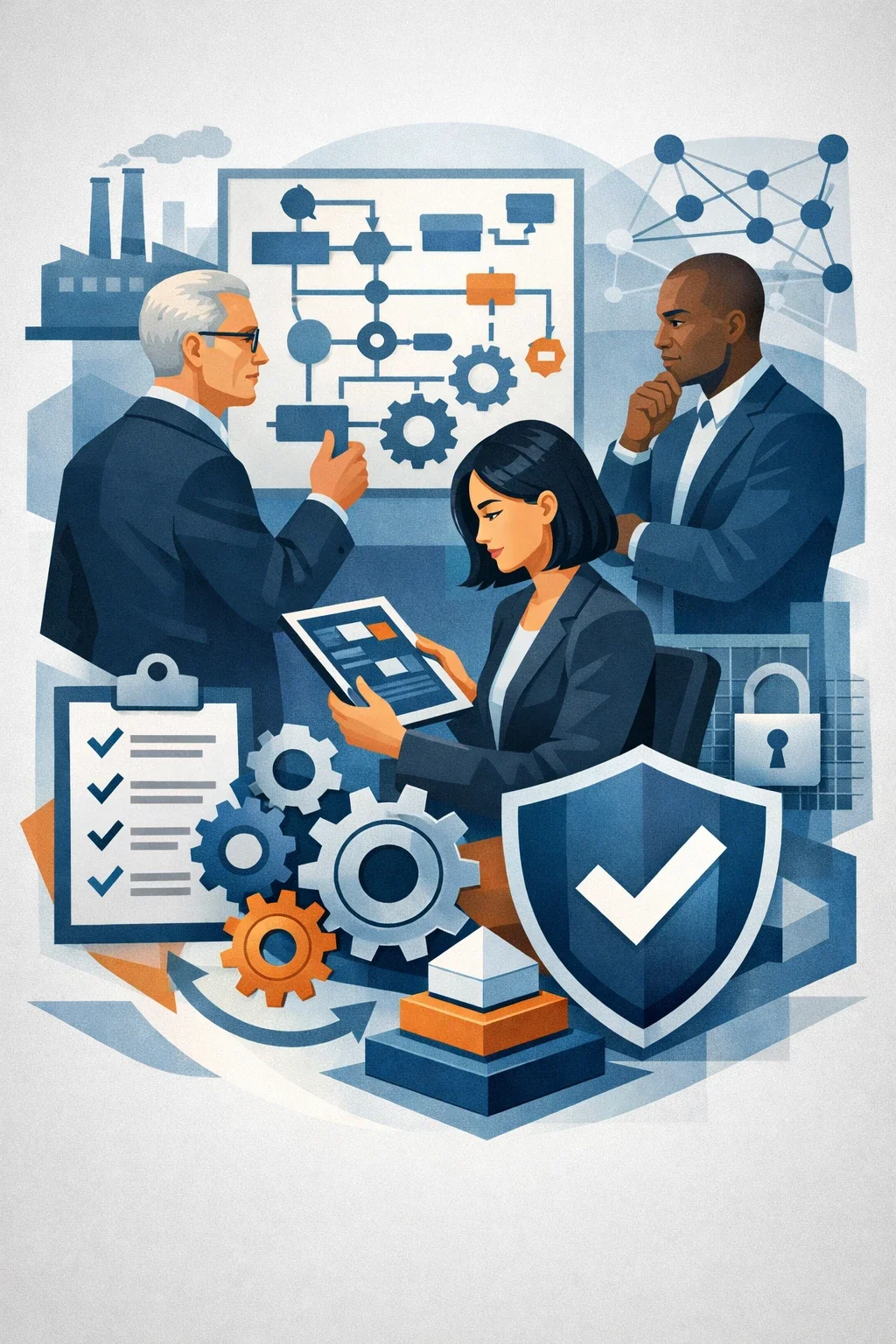
What Process Improvement Consulting Actually Means
Process improvement consulting is the structured evaluation and redesign of how work moves through an organization.
This includes identifying inefficiencies, eliminating redundant steps, strengthening control points, and aligning processes with strategic objectives.
Improvement initiatives typically focus on:
Eliminating unnecessary workflow steps
Reducing operational bottlenecks
Improving decision clarity and accountability
Strengthening performance measurement
Standardizing repeatable operational procedures
Aligning processes with regulatory or ISO requirements
Organizations frequently underestimate how many problems originate from unclear or inconsistent process design rather than individual performance.
Process improvement addresses the system — not the symptoms.
For companies operating within formal governance frameworks, improvement efforts often align with broader ISO Management System Consulting initiatives where operational processes must support compliance and audit defensibility.
Signs Your Organization Needs Process Improvement Consulting
Operational inefficiency rarely appears as a single visible problem.
It usually shows up as a pattern of recurring friction.
Common indicators include:
Teams repeatedly solving the same operational issues
Inconsistent service delivery or product quality
Excessive manual work or duplicate effort
Lack of visibility into operational performance
Departments operating in silos
Projects delayed by unclear approvals or handoffs
Leadership lacking reliable operational data
When these issues persist, organizations benefit from structured diagnostic analysis through Enterprise Risk Management frameworks that evaluate how operational risks originate from process weaknesses.
Process improvement consulting addresses the structural causes of these operational risks.
The Process Improvement Methodology
Effective improvement initiatives follow a structured methodology rather than ad-hoc operational adjustments.
Process Discovery and Mapping
The first step is understanding how work actually occurs inside the organization.
This includes:
Documenting workflows and decision paths
Identifying process owners and responsibilities
Mapping inputs, outputs, and dependencies
Identifying system integrations and manual tasks
Many organizations are surprised by how many undocumented processes exist across departments.
Structured documentation is often formalized as part of Implementing a System, ensuring operational workflows are clearly defined and controlled.
Operational Bottleneck Analysis
Once processes are mapped, consultants identify inefficiencies and structural weaknesses.
Common improvement targets include:
Workflow delays and approval bottlenecks
Redundant process steps
Excessive manual data handling
Inconsistent operational procedures
Lack of escalation or decision pathways
These weaknesses frequently surface during internal operational evaluations conducted through Conducting an Audit, where systemic process gaps become visible.
Improvement initiatives then focus on redesigning workflows to eliminate these structural constraints.
Process Redesign and Optimization
After weaknesses are identified, organizations redesign processes to improve efficiency and clarity.
Key redesign objectives include:
Simplifying operational workflows
Reducing decision complexity
Clarifying accountability structures
Introducing automation opportunities
Standardizing procedures across departments
Strengthening documentation and governance
Improvement is not about adding bureaucracy.
It is about removing operational friction while strengthening control points.
Organizations implementing formal management systems often embed redesigned workflows as part of ISO 9001 Quality Management System frameworks where processes must be documented, measurable, and continuously improved.
Performance Measurement and Continuous Improvement
Process improvement is not a one-time exercise.
Sustainable improvement requires measurable performance indicators and structured monitoring.
Organizations typically establish:
Process performance metrics
Operational dashboards
Corrective action systems
Continuous improvement programs
Leadership performance reviews
Once implemented, these systems are sustained through structured governance models such as Maintaining a System, ensuring improvements remain operational rather than temporary.
Continuous monitoring prevents process decay and maintains operational efficiency over time.
Types of Processes Commonly Improved
Process improvement consulting can target nearly any operational function.
However, the most common improvement areas include:
Quality management workflows
Supply chain and procurement processes
Compliance and regulatory oversight
Risk management and governance structures
Product development or service delivery pipelines
Internal audit and corrective action systems
Cross-department operational coordination
Organizations implementing multi-standard governance often integrate these improvements through Integrated ISO Management Consultant models that unify operational processes across multiple frameworks.
Integrated governance reduces duplication and simplifies organizational control structures.
Process Improvement vs Process Consulting
Although closely related, the two services are slightly different.
Process Consulting focuses on diagnosing workflow issues and recommending structural improvements.
Process Improvement Consulting goes further by implementing those changes and embedding sustainable operational governance.
Process consulting answers:
What is broken?
Where are the inefficiencies?
What structural changes are needed?
Process improvement answers:
How should the system be redesigned?
How will improvements be implemented?
How will the organization sustain the new process structure?
Both services often operate together as part of broader ISO Compliance Services, where process maturity directly impacts certification readiness and operational governance.
Benefits of Process Improvement Consulting
Organizations that implement structured process improvement see measurable operational gains.
Typical outcomes include:
Reduced operational costs
Faster service delivery and cycle times
Improved product or service consistency
Greater visibility into operational performance
Reduced regulatory or compliance risk
Improved cross-department coordination
Higher employee productivity and clarity
The most valuable benefit is predictability.
Well-designed processes allow organizations to scale operations, onboard employees faster, and respond to market changes with confidence.
Why Process Improvement Fails Without Structure
Many organizations attempt process improvement internally and struggle to achieve sustainable results.
Common causes include:
Improving processes without documenting them
Ignoring leadership accountability structures
Implementing tools without redesigning workflows
Treating improvement as a one-time project
Failing to measure operational performance
Process improvement succeeds when it is embedded within a governance framework, not treated as a temporary initiative.
This is why many organizations integrate improvement efforts within formal management systems and operational governance programs.
When to Engage Process Improvement Consulting
Organizations typically seek process improvement consulting when they are experiencing:
Rapid organizational growth
Operational inefficiencies
Recurring quality or compliance issues
Organizational restructuring
Preparation for ISO certification
Digital transformation initiatives
Leadership-driven operational excellence programs
Early intervention prevents operational complexity from escalating as organizations scale.
Next Strategic Considerations
Organizations improving operational processes often evaluate adjacent governance and consulting initiatives.
Common next steps include:
These services help organizations move beyond isolated improvements toward fully structured operational governance systems that scale with organizational growth.
Contact us.
info@wintersmithadvisory.com
(801) 477-6329