
Sustainability Management Consulting
Understanding Why Organizations Pursue Sustainability Management
Most organizations don’t start exploring sustainability because it’s trendy. It usually begins with pressure.
Customers ask for environmental disclosures. Investors request ESG metrics. Regulators increase reporting expectations. Internally, leadership starts questioning operational waste, energy exposure, or supply chain risk.
At that point, sustainability stops being a branding conversation and becomes an operating model issue.
Sustainability management consulting exists to translate those pressures into structured systems—not campaigns, not reports, and not isolated initiatives. The goal is to build something repeatable, measurable, and auditable.
For many organizations, this intersects directly with broader frameworks like Environmental, Social, & Governance, where expectations extend beyond environmental impact into governance structure, accountability, and performance tracking.
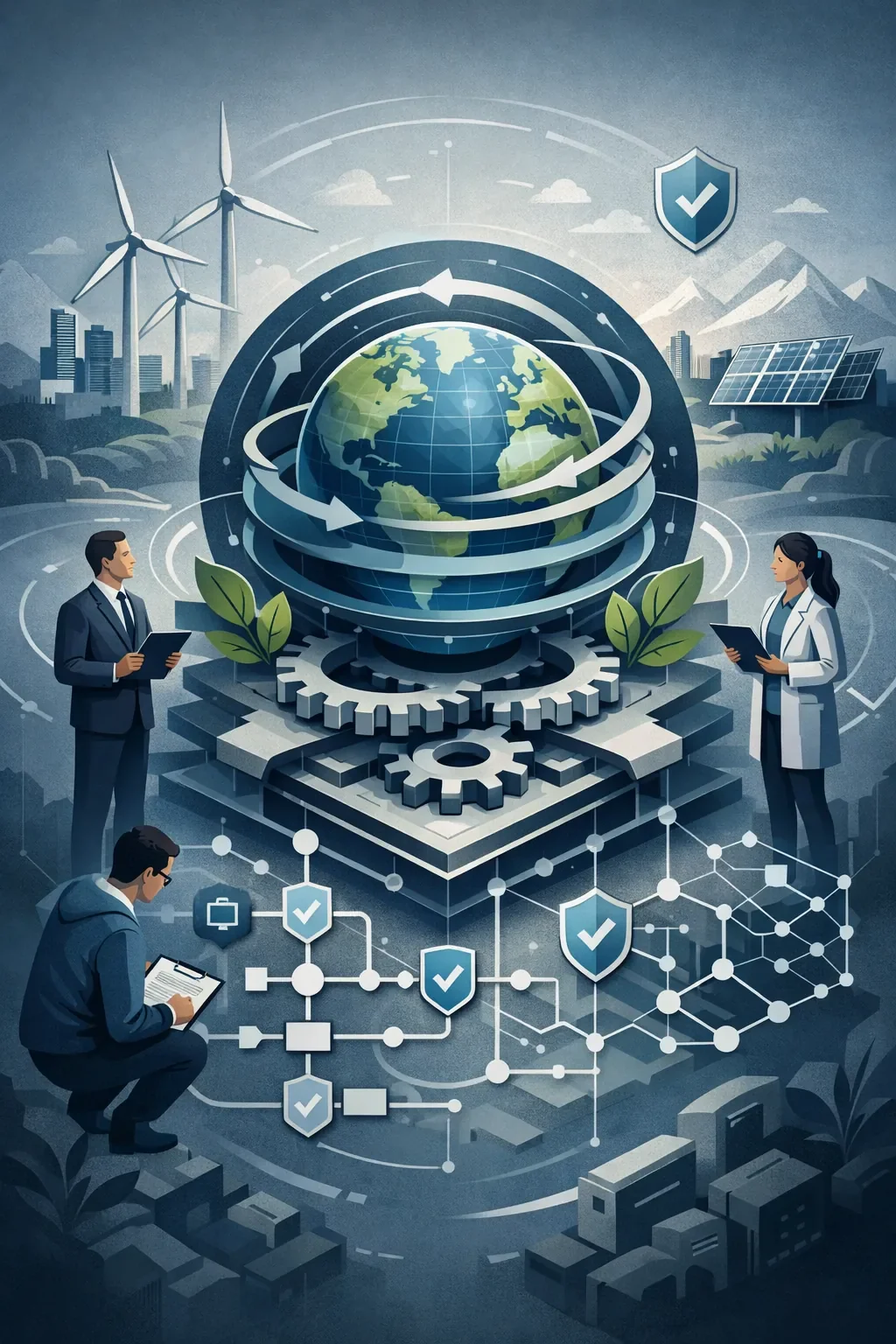
What Sustainability Management Consulting Actually Is
Sustainability management consulting is the design and implementation of systems that control, measure, and improve environmental and social performance across an organization.
It is not:
A reporting exercise
A marketing initiative
A one-time project
It is:
A management system embedded into operations
A structured approach to identifying, controlling, and improving sustainability risks
A framework for aligning environmental impact with business objectives
At its core, sustainability management consulting borrows heavily from management system thinking—similar to quality, safety, or information security systems.
That’s why it often aligns closely with standards like ISO 14001 Implementation, which formalizes environmental management into a structured, auditable system.
How Sustainability Management Systems Work
A sustainability management system is built around a cycle of planning, execution, evaluation, and improvement.
Core Components
Environmental and sustainability policy aligned with business strategy
Identification of environmental aspects and impacts across operations
Risk and opportunity analysis tied to sustainability performance
Defined objectives with measurable performance indicators
Operational controls embedded into daily workflows
Monitoring, measurement, and reporting mechanisms
Internal audit and management review processes
Continuous improvement structure tied to performance outcomes
This is not theoretical. It becomes part of how decisions are made, how suppliers are evaluated, and how processes are executed.
Organizations that approach sustainability without structure often struggle to scale. Systems are what make sustainability operational.
How Implementation Actually Works
Sustainability management consulting follows a structured implementation model. It’s not a linear checklist—it’s a staged integration into the business.
Phase 1: Context and Baseline Assessment
This is where most organizations underestimate the complexity.
Identify regulatory, customer, and stakeholder requirements
Map environmental aspects across operations
Evaluate current controls and performance gaps
Assess data availability and reporting maturity
This step often overlaps with broader risk evaluation, especially when tied to Enterprise Risk Management frameworks.
Phase 2: System Design
The system is designed to fit the organization—not the other way around.
Define scope of the sustainability management system
Establish governance structure and responsibilities
Develop objectives aligned with business priorities
Build process-level controls and procedures
This is where sustainability transitions from concept to structure.
Phase 3: Integration Into Operations
This is the most critical and most difficult phase.
Embed controls into existing workflows
Align sustainability metrics with operational KPIs
Train personnel on roles and expectations
Integrate sustainability into procurement and supplier management
This phase often requires broader operational alignment through services like Process Consulting, especially when sustainability impacts production, logistics, or supply chain design.
Phase 4: Validation and Audit Readiness
Before any formal certification or external reporting, the system must be tested.
Internal audits validate system effectiveness
Data integrity and reporting accuracy are reviewed
Corrective actions are implemented
Leadership reviews system performance
This aligns directly with structured evaluation processes such as Conducting an Audit.
Phase 5: Certification or External Alignment (Optional)
If certification is pursued, organizations move toward formal validation through standards like ISO 14001.
This includes:
Stage 1 readiness review
Stage 2 certification audit
Ongoing surveillance audits
This is where ISO 14001 Audit becomes relevant, ensuring the system meets external requirements—not just internal expectations.
What Goes Wrong in Sustainability Initiatives
Most sustainability efforts fail for predictable reasons.
Common Mistakes
Treating sustainability as a reporting function instead of an operating system
Building documentation without operational integration
Assigning ownership without authority or accountability
Focusing on metrics without defining control mechanisms
Underestimating data collection complexity
Ignoring supplier and third-party impacts
Treating certification as the goal instead of system performance
A common pattern is organizations attempting to “layer” sustainability on top of existing operations without changing how decisions are made.
That approach does not hold under audit, and it does not scale.
What Auditors and Stakeholders Actually Look For
There’s often a misconception that sustainability systems are judged by documentation quality. They are not.
They are evaluated based on consistency and effectiveness.
Auditors and stakeholders typically look for:
Clear linkage between environmental risks and operational controls
Evidence that objectives are actively managed, not just defined
Consistent data collection and reporting practices
Demonstrated corrective actions and continuous improvement
Leadership involvement and accountability
Integration into business decision-making processes
This is why maintenance matters as much as implementation. Systems degrade quickly without structured oversight, which is where Maintaining a System becomes critical.
The Consulting Engagement Model
Sustainability management consulting is not a one-size engagement. It adapts to the organization’s maturity.
Typical Engagement Structure
Initial gap and readiness assessment
System design tailored to operational complexity
Implementation support with process integration
Internal audit and readiness validation
Certification support (if applicable)
Ongoing system maintenance and improvement
Execution often includes direct involvement in system build-out through services like Implementing a System, rather than simply advising from a distance.
The difference is practical ownership—building something that actually works inside the organization.
Strategic Value Beyond Compliance
Organizations that approach sustainability as a compliance requirement tend to see limited value.
Organizations that integrate it into operations see measurable outcomes.
Strategic Benefits
Reduced operational waste and cost inefficiencies
Improved supply chain resilience and transparency
Stronger positioning with customers and regulators
Better alignment with investor expectations
Increased organizational discipline and process control
Enhanced risk visibility across environmental and operational domains
Sustainability, when structured correctly, becomes part of operational excellence—not an external obligation.
It aligns closely with broader system thinking seen in frameworks like Sustainability Management Systems, where environmental performance is embedded into the organization’s core operating model.
Where Sustainability Consulting Fits in a Broader System Strategy
Sustainability does not exist in isolation.
It intersects with:
Quality management systems
Risk management frameworks
Supply chain governance
Business continuity planning
Regulatory compliance structures
Organizations that treat sustainability as a standalone function often duplicate effort and create inconsistencies.
Those that integrate it into a unified system architecture create alignment—and that’s where real value is realized.
Next Strategic Considerations
If you’re evaluating sustainability management consulting, these areas are often considered next:
These represent the natural progression from sustainability intent to structured, operational systems.
Contact us.
info@wintersmithadvisory.com
(801) 477-6329