
Data Privacy Services
If you are evaluating data privacy services, you are likely trying to answer questions such as:
What does a mature data privacy program actually include
How do we align privacy with existing security and compliance controls
What frameworks or regulations apply to our organization
How do we reduce regulatory exposure without slowing operations
What does a defensible privacy posture look like to auditors and regulators
Data privacy is no longer a policy exercise. It is an operational discipline tied directly to risk, regulatory exposure, and customer trust.
Strong organizations do not treat privacy as a legal afterthought. They build structured, auditable systems that govern how data is collected, used, stored, and protected across the enterprise.
This is where disciplined data privacy services create measurable value.
What Are Data Privacy Services?
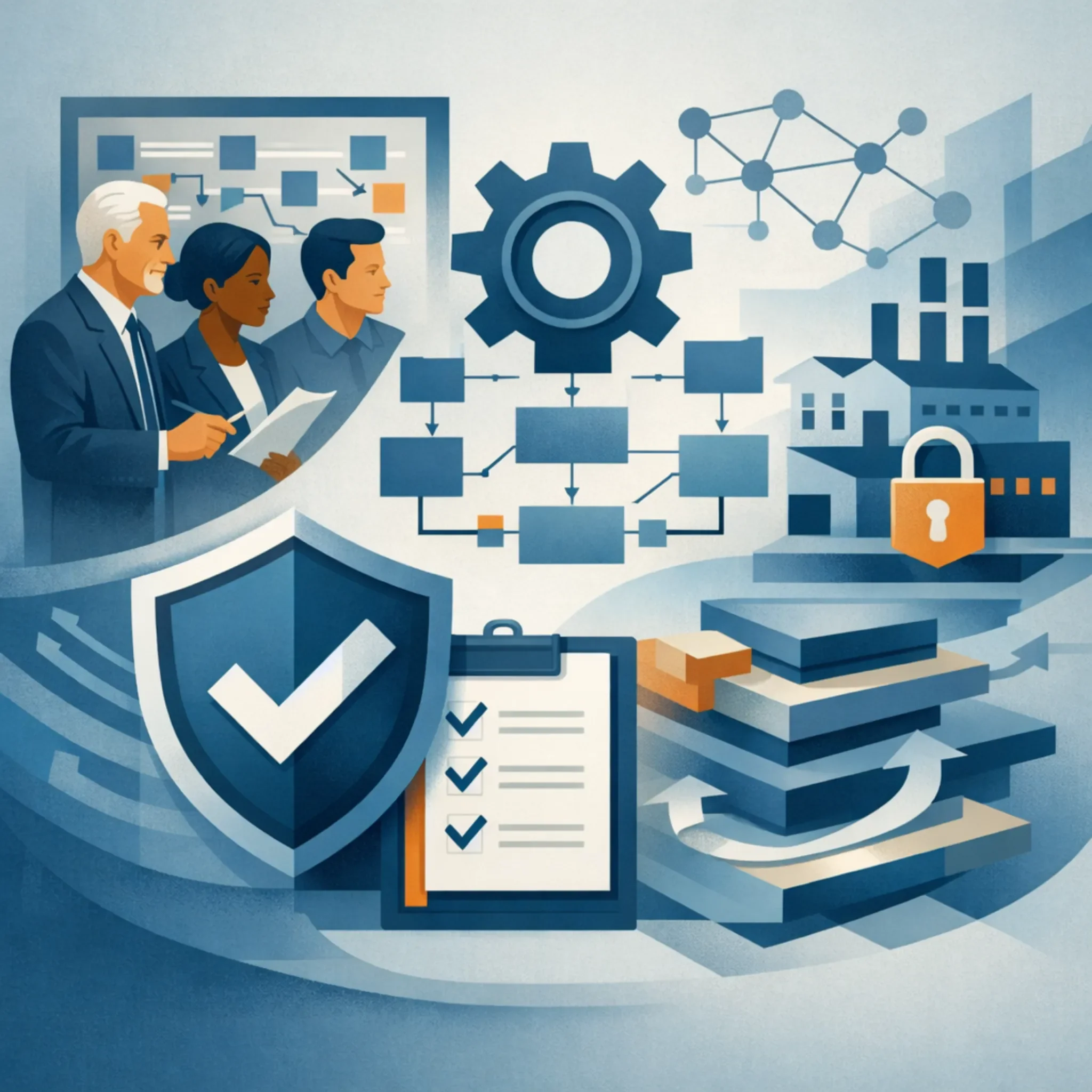
Data privacy services focus on designing, implementing, and maintaining structured controls that govern personal and sensitive data across your organization.
This includes:
Data identification, classification, and lifecycle management
Privacy risk assessment and regulatory alignment
Policy and control development
Data subject rights management processes
Incident response for privacy events
Ongoing monitoring and audit readiness
These services are not isolated activities. They operate as part of a broader governance system aligned with risk, compliance, and security.
Organizations often align privacy initiatives with broader programs like Regulatory Compliance Management to ensure consistency across obligations.
Why Data Privacy Has Become a Strategic Requirement
Privacy requirements are expanding across jurisdictions and industries. Organizations now face overlapping regulatory expectations, contractual requirements, and customer-driven security demands.
Common drivers include:
Expanding global privacy regulations such as GDPR and state-level laws
Increased regulatory enforcement and financial penalties
Customer expectations for data transparency and control
Vendor and third-party data handling scrutiny
Integration with cybersecurity and enterprise risk programs
Privacy is no longer optional. It is a core component of governance.
Organizations that treat privacy as part of Enterprise Risk Management tend to build more resilient and defensible programs.
Core Components of Data Privacy Services
Data Discovery and Classification
You cannot protect what you do not understand.
A structured privacy program begins with identifying:
Personal data across systems and processes
Data flows between internal and external environments
Sensitive data categories and regulatory exposure points
Ownership and accountability for data assets
Without this foundation, privacy controls become fragmented and ineffective.
Privacy Risk Assessment
Privacy risk is not theoretical. It must be evaluated in operational terms.
Effective assessments include:
Regulatory applicability analysis
Data processing risk evaluation
Cross-border data transfer considerations
Third-party data exposure risks
Impact analysis for potential breaches or misuse
Organizations often integrate this into broader Compliance Risk Assessment activities to unify risk visibility.
Policy and Governance Structure
Privacy policies must translate into operational controls.
This includes:
Data handling and classification policies
Acceptable use and retention policies
Data subject rights procedures
Breach notification protocols
Governance roles and accountability
Policies that are not operationalized will not withstand audit scrutiny.
Data Subject Rights Management
Regulations require organizations to support:
Access requests
Data correction and deletion
Portability requirements
Consent management
These processes must be:
Documented
Repeatable
Timely
Auditable
Manual or inconsistent approaches create compliance exposure.
Privacy Incident Response
Privacy incidents must be handled differently than general cybersecurity events.
Requirements include:
Rapid identification of affected data
Regulatory notification timelines
Customer communication protocols
Legal and compliance coordination
Root cause analysis and corrective action
Organizations often align privacy response with broader Incident Management Services to ensure consistency.
Continuous Monitoring and Improvement
Privacy is not static.
Effective programs include:
Ongoing control monitoring
Internal audit and testing
Regulatory change tracking
Continuous improvement processes
Executive reporting and oversight
Organizations that align privacy governance with Maintaining a System practices achieve long-term sustainability.
Regulatory and Framework Alignment
Data privacy services must align with multiple regulatory and standards-based frameworks.
Common alignment includes:
GDPR and international privacy regulations
CCPA and U.S. state-level privacy laws
HIPAA for healthcare data protection
PCI DSS for payment data environments
ISO-based frameworks for structured governance
Organizations implementing structured privacy management systems often align with ISO 27701 Privacy Management, which extends ISO 27001 into privacy governance.
This integration reduces duplication and strengthens audit readiness.
Integrating Privacy with Cybersecurity and Compliance
Privacy does not operate in isolation.
It must integrate with:
Information security controls
Risk management frameworks
Compliance governance systems
Operational processes and workflows
For example, organizations aligning privacy with ISO 27001 Consultant frameworks can leverage existing controls for:
Access management
Encryption and data protection
Incident detection and response
Audit and monitoring
This reduces duplication and improves system maturity.
Similarly, privacy initiatives aligned with Cybersecurity Compliance Consulting programs ensure regulatory and security requirements remain synchronized.
The Role of Process Design in Privacy Programs
Many organizations fail not because they lack policies, but because they lack process design.
Effective privacy programs rely on:
Clearly defined workflows for data handling
Standardized procedures across departments
Defined escalation and decision-making structures
Integration with operational systems
This is where structured Process Consulting becomes critical.
Without process discipline, privacy controls remain theoretical.
Common Data Privacy Mistakes
Organizations frequently struggle with:
Treating privacy as a legal-only function
Lack of data visibility across systems
Inconsistent handling of data subject requests
Weak integration with cybersecurity controls
Poor documentation and audit trails
Failure to assign clear accountability
These issues are not solved with more policies. They are solved with system design and governance discipline.
How Data Privacy Services Are Delivered
A structured approach typically follows four phases.
Phase 1 – Assessment and Gap Analysis
This phase evaluates:
Current data practices
Regulatory exposure
Existing controls and documentation
Organizational readiness
Organizations often align this with broader Conducting an Audit activities to ensure objectivity.
Phase 2 – Program Design
This phase defines:
Governance structure
Policies and procedures
Control framework
Data lifecycle management approach
Metrics and reporting
The focus is clarity and operational usability.
Phase 3 – Implementation
This phase includes:
Documentation development
Process rollout
Training and awareness
Technology alignment
Control deployment
Organizations that treat implementation as a structured Implementing a System initiative move faster and reduce rework.
Phase 4 – Ongoing Management
This phase ensures:
Continuous monitoring
Internal audit readiness
Regulatory alignment updates
Executive reporting
Continuous improvement
Privacy is sustained through discipline, not one-time effort.
Benefits of Structured Data Privacy Services
A mature privacy program delivers measurable outcomes:
Reduced regulatory exposure and enforcement risk
Improved customer trust and brand credibility
Stronger vendor and partner qualification positioning
Increased operational clarity around data handling
Better integration between compliance, security, and operations
Defensible audit posture and documentation
Organizations that align privacy with broader governance frameworks often see compounding benefits across risk, compliance, and operational efficiency.
Is Data Privacy Investment Worth It?
If your organization:
Handles customer, employee, or partner data
Operates across multiple jurisdictions
Supports enterprise or regulated clients
Faces increasing regulatory scrutiny
Relies on digital platforms or data-driven operations
Then data privacy services are not optional.
They are foundational to how your organization operates, competes, and maintains trust.
Privacy is not about avoiding fines. It is about demonstrating control, discipline, and accountability in how data is managed.
Next Strategic Considerations
Contact us.
info@wintersmithadvisory.com
(801) 477-6329